
How do you secure your decoys to your bench?

Tom Barb

Active member
Wondering how everyone secures their decoys to your benches. I have a bench top vise at the moment with a temporary plywood keel screwed to the bottom. Hoping to get a woodworkers vise built into the bench soon to minimize movement.

I am having trouble spokeshaving and using the draw knife. They both seem to be skipping across the wood. There seems to be a lot of movement in the vise/temp keel. It just seems flimsy. What else do you all use to screw to the decoy?

Also, could it be that the spokeshave is just not tuned properly? I messed with it at all settings with no success.
 
Tom, If your using a standard vice, weld up at 1/4" steel "T" screw this to the decoy then clamp in the vice. Better than plywood, but eventually you'll want to get some sort of work positioner.
 
I like using a plumbing flange and 8" pipe. Nice and round so you can turn it any direction or angle. I have some T's as Jode suggested also that I use on smaller birds
 
I've used a Steel T bracket, with 4 holes for screws, in a regular vice, for 30+ years. Angles are not that difficult after you work with it awhile. Use it for bottom, and then top firm attachment. Made everything from Swans to Robins on it. Always wanted a Wilton, but never bought one.
 
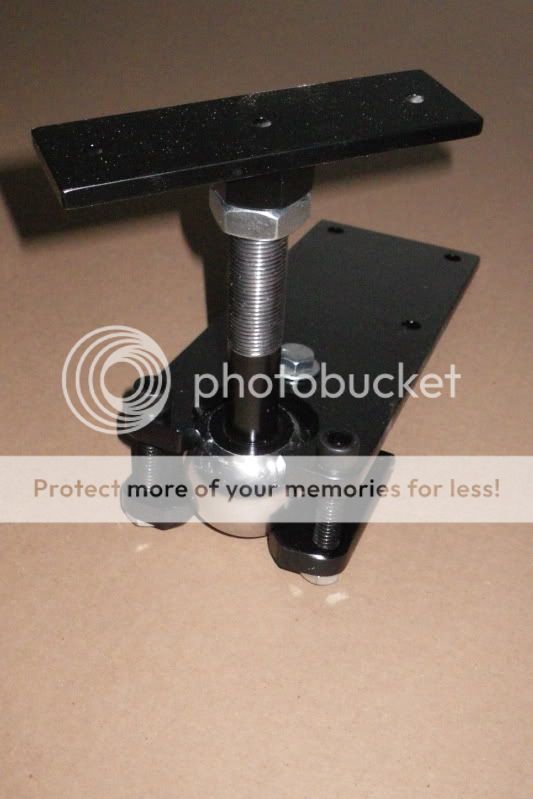
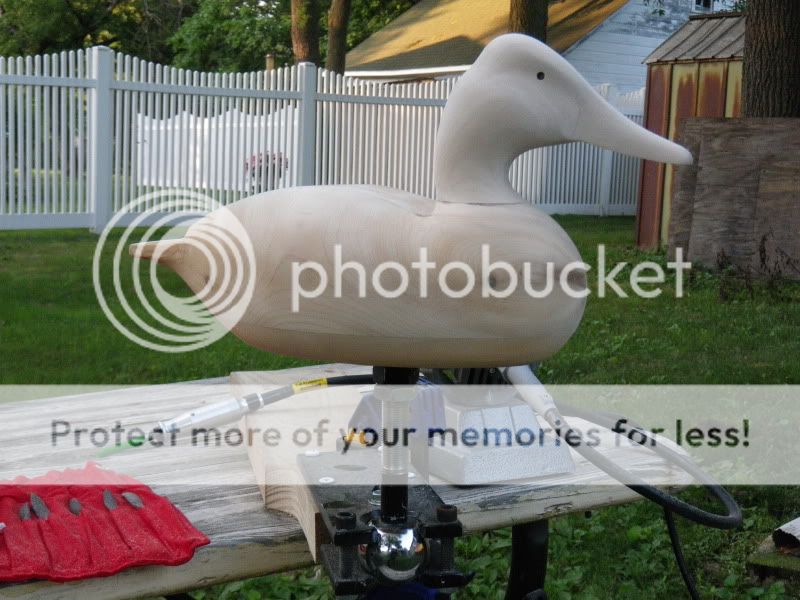
I use a pivoting clamp that I made for myself. The upper plate is fastened to the underside of a decoy blank when in use. The lower plate can be clamped in a vise or secured to the bench top with bolts or screws.

vise2.jpg


IMGP0366.jpg

 
Thanks for the responses guys. Lots of great ideas. I think I'll try the pipe and bracket idea first as it is the cheapest and most readily available. Dave that is a really neat looking setup.
 
For years I've used a simple t-frame made from scrap hardwood. The base or support is about 1"x2"x6" long with strip of hardwood epoxied and lag bolted into pilot holes drilled into the base. The top T has two 1/4" holes drilled for short lag screws to mount the decoy block. I use a swivel- base machinest vice. With this arrangement I can turn or tilt the base support in any direction to shape the block with draw knives, gouges and finally rasps and sandpaper. It is cheap, quick to produce, allowing you to make several at a time for working on different blocks if you want.

View attachment IMG_1954.jpg.


View attachment IMG_1957.jpg.
 
Thanks for all the ideas. Steve I scrounged around me shop and found some angle with holes in it. I threw this together and seemed to work alright. Still need some tweaking in the design but it worked.

 
Looks good Tom. You mentioned problems with wood removal- I've found a 12" drawknife works well for fast initial shapeing followed by sureform files to smooth the contours. I have several spokeshaves but the only one I ever use is a Kutz coopers spokeshave when making canoe paddles or sculling oars.
 
Back
Top