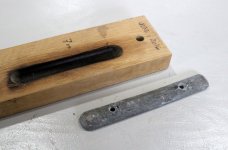
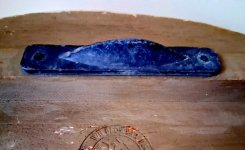
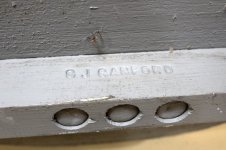
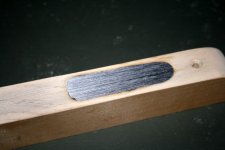
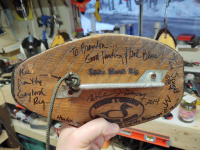
Anyone know if there is a mold available to make this style of keel weight. I know I can make one with an angle grinder, carbide bit and thick aluminum stock but would purchase if they are available
Anyone know if there is a mold available to make this style of keel weight. I know I can make one with an angle grinder, carbide bit and thick aluminum stock but would purchase if they are available View attachment 71713

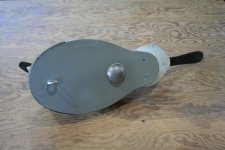
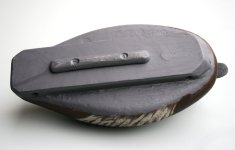
2. I have salvaged a few off "restoration" decoys. I have always liked the style - and ease of installation. Note that one (upper right) pulled off its screw head. So, I always flatten 2 sides of the screw head so it forms a tee - and is less likely to spin.
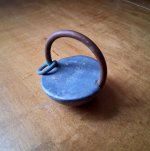
3. I use an antique muffin tin for anchors and keel weights. In addition to using a flattened screw, I bed the keel weight in caulk to keep moisture out to prevent spinning.
Here's a nice mushroom anchor - from a good friend - from the same mold.
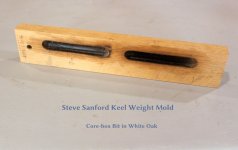
4. You can use a dense hardwood for a mold - if you will not be making lots of ballasts. I make them different lengths for different weights. The longer "trough" is on the flip side.
I rub beeswax into the slot before the first pour.
To shape you ballast weight in hardwood, I would first use a Forstner bit on a drill press to establish the widths and depths. Then I would clean and smooth everything inside with a Dremel or Foredom. A fussy job in any event!
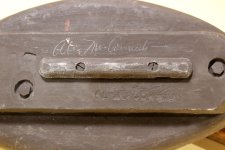
Here is a McCormick keel weight on an Al McCormick Black Duck.
And a McCormick Broadbill.
Here is his mold - from a length of iron pipe - but I think EMT would work nicely.
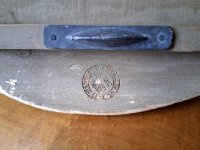
5. Another similar factory-made ballast - with a flange and 2 screws. This Hen Pintail is from the Wildfowler Quogue factory.
A closer view.
6. I usually pour lead into the keels - prior to fastening the keels to the bodies.
I frequently bore 3 or 4 "sockets" then join them together with knife and chisel. I pour the lead a bit proud then sand flush with a belt sander.