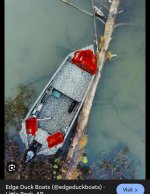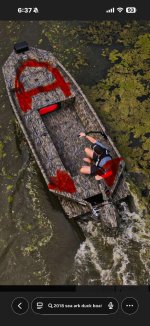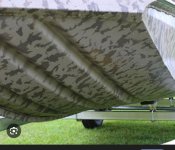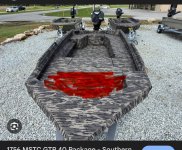
Hunting / Fishing Boat

Dustin L

New member
I'm in the process of researching a hunt / fish boat build. While there are a bunch of topics on there that are close, none that I found hit the mark exactly or are fairly dated. Apologies in advance if this is overly redundant.

So with that - I'm looking for a welded aluminum boat, 18-20'. Use will be out west, marshes, small to large lakes and maybe at some point putting on a jet conversion to access a couple of the rivers close. No saltwater planned for now. Typically it'll be 2-3 people, gear and a dog. Only interested in tiller steer, right now the plan is to put it on a hydraulic jack, maybe modify with a low water intake and see how that does for a year or so. But, a couple the places I'll be hunting are shallow w/ a lot of salad , so at some point it'll probalby be a necessity to put on a mud motor. BTW, anyone mount a surface drive on a hydraulic jack, thoughts? It'll need to have a decent enough size front deck to comfortably fish off of. Needs to handle moderately rough water with a little common sense applied.

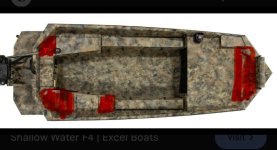
As far as manufacturers, looks to me there is a SeaArk dealer in Idaho and an Excel dealer in Utah, but any options west of those would be better for me. Could always go with a Lowe/Lund/Grizzly but as of now those aren't real high on my list. Also, not really interested in a full custom build, there's a couple great ones close but they typically specialize in sleds / drift boats so I'm not sure my wallet could affort those shops for a one-off boat.

So with all that, I'm all ears on manufacturers, layouts, specs of the build and anything else this group would offer.

Thanks in advance everyone! If PM is better please feel free (y)

 
Welcome aboard Dustin!
Lots of options in that size range in Aluminum hulls.
Lots of salad and jet drives doesn't really mix, so I'd think you are looking at a surface drive.
No experience with them, so I'll let others jump in.
BTW, which state, or states?
.
 
Welcome aboard Dustin!
Lots of options in that size range in Aluminum hulls.
Lots of salad and jet drives doesn't really mix, so I'd think you are looking at a surface drive.
No experience with them, so I'll let others jump in.
BTW, which state, or states?
.
Thanks Carl, if I have the time it'll be used from Central Wa to Central Ca but reality is most time probalby between the Sac Delta and Klamath. Hope is to replace the SD after season with an outboard for fishing. The jet conversion is really an afterthought that I'm just now researching, but it seems there are a kits where I could go back and forth from prop to jet to run a few of the rivers around here, not for use in marshes or lakes.
 
The jet conversion is really an afterthought that I'm just now researching, but it seems there are a kits where I could go back and forth from prop to jet to run a few of the rivers around here, not for use in marshes or lakes.
Yes, one could swap lower units but is not just a matter of dropping one lower unit and bolting on the other.
I am researching a 1760 tunnel hull set up with a 60hp propped engine. Yes a jet will run a bit shallower, but one gives up HP and ability to run in vegetation, snow slush and even fall leaves. If you run much sand or pea gravel, you will be wearing out both the impeller and the impeller liner.
 
Im a broke record at this point, but I would take a hard look at havoc boats. I run a mudmotor on mine and when I first bought my boat, I had every intention on fishing and hunting out of it and only having 1 boat. I run a mudmotor for 3 spots I hunt that you would absolutely destroy a jet or prop getting too. Sand would ruin a jet and 3-6" for 300-400 yard stretch would be hell on an outboard.

When i went through all the aluminum boat manufacturers, the weight of foam kept coming back as a negative for me because of the flat bottoms. I settled on the havoc MSTC because of the reverse chines and it acts just like a flat bottom but it has chines and they dont have to have near the amount of foam all the other flat bottom boats do in an aluminum hull. In turn, my storage hatches are 3x bigger than my buddies excel boats. I too wanted to fish out of mine, so I got the high deck and had them put in a trolling motor tray off the front. I since have bought a bass boat and covered it with an aluminum plate but it fished very comfortably off that front deck for quite a few seasons.

I know for a fact... you can run a 115hp on this boat. Its rated for a 75 hp (I think). My boat is a 1756 and I think if you get up into the 18-20 foot havocs, they are rated for a 90. The 90 merc and the 115 merc are the exact same weight btw. Just throwing that out there.

As far as a hydro JP with a mudmotor, not sure what you are accomplishing. The higher the hp on a mud motor, the more it likes being out of the water column. My first mudmotor, many ancient moons ago, was an 18 hp. The sweet spot was about 3-4" of the prop fully under water. My next was a 40 hp efi mudbuddy and it liked just being under the water surface. My current 5000efi mudbuddy, the prop is actually about 3" out of the water and it just moves that boat. I see 30-31 at the beginning of the season with a full load with a fresh prop. Usually my final run, at the end of the season, im seeing 27-29 on a pretty wore out prop. I run so much sand and silt, i go through a prop a season and in turn, will lose high end performance. Never have any issues jumping up on plane and get going, unless im real heavy. I can run 3 guys, a dog, and 3 doz decoys without any issue with the big blade. As soon as I put a 4th guy in the boat, I have to go to the hammer prop and best I see is 24 with that prop and thats if im loaded to the gills or absolutely empty. If I have that 4th guy in the boat, the big blade wont get on plane and I only see 11-12 mph.

My boat is fast. I took this mudmotor off an excel 20 foot and the guy could only get 22 mph empty and 18 fully loaded. I drove it many times and was discouraged. When he finally went the outboard route, I asked to try it on my boat. When we ran it and saw how good it did, it never came off and I sold my 40efi a couple weeks later. Mine sees much better performance and I attribute that to far less weight of the hull due to lack of foam. I even had my hull custom made with the .0125 aluminum vs the .01 that havocs are usually made with. So even then, I made it a bit heavier.

Reach out with any questions, I dont mind sending pics or video of my boat.
 
As far as dealer, i went with greg orr marine. At the time, they had a delivery guy that would charge x amount per mile. I decided to meet him half way. Settled on a meeting spot, and I signed 2 papers and hauled butt home and got it done in a single day. Same thing for my bass boat. Bought that one out of tx as well and met that delivery guy half way as well. I think most boat places have these services, so dont settle on boat companies close to you. Theyll bring it all the way to your door if you are willing to pay the delivery price.

I meant to mention as well, Havoc has partnered with freedom outboard. So if you want that outboard feel, with the "supposed possibilities" of a mudmotor, you might get it all in one package. When my 5000 efi goes boom, ill be taking a hard look at the freedom outboards. I may just do another 5000 efi mudbuddy and I really like all the new features they put on the new mudbuddies. But i HATE how loud a mudmotor is.
 
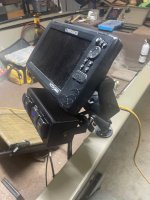
What type of fishing do you do? I like a front and rear casting deck and wide open in between. I like the grip that cheap outdoor carpet provides on muddy boots. I built a mini-console on a ball mount for electronics and switches. It’s mounted on the gunnel but folds down out of the way of the blind.

I agree, tiller is the way to go for a hunt/fish rig.
 

Attachments

  • IMG_2292.jpeg
    IMG_2292.jpeg
    348.4 KB · Views: 5
What type of fishing do you do? I like a front and rear casting deck and wide open in between. I like the grip that cheap outdoor carpet provides on muddy boots. I built a mini-console on a ball mount for electronics and switches. It’s mounted on the gunnel but folds down out of the way of the blind.

I agree, tiller is the way to go for a hunt/fish rig.
I like the idea of a couple bases for RAM mounts or similar in strategic areas to mount controllers, sonar, etc. I'm still early in the process mainly figuring out how to strike a balance between open and just enough watertight storage for my gear. I suspect the test will be how many bags of dekes I can hold without them being mounded up to the point where I can't see. For that I'm probably going to need to take a road trip to see some layouts in person. As far as fishing, all of it really. A long time ago I was a modestly serious bass guy and still have a boat for that, but at this point in my life that's become sort of an issue. That boat is amazing for going fast comfortably and safely, and provides a great platform for bass fishing, but aside from that the limitations are fairly serious unless you're willing to beat the heck out of a boat that costs that much, I'm not that guy.
 
I like the idea of a couple bases for RAM mounts or similar in strategic areas to mount controllers, sonar, etc. I'm still early in the process mainly figuring out how to strike a balance between open and just enough watertight storage for my gear. I suspect the test will be how many bags of dekes I can hold without them being mounded up to the point where I can't see. For that I'm probably going to need to take a road trip to see some layouts in person. As far as fishing, all of it really. A long time ago I was a modestly serious bass guy and still have a boat for that, but at this point in my life that's become sort of an issue. That boat is amazing for going fast comfortably and safely, and provides a great platform for bass fishing, but aside from that the limitations are fairly serious unless you're willing to beat the heck out of a boat that costs that much, I'm not that guy.
Yup... thats why I have my duck boat and my bass boat. I get where you are at in that mindset. Pretty sure all the companies you listed and the havoc have the rail system. You can find PLENTY of accessory plates that go to the rail system and you can mount fishfinders or whatever to. I have tie downs on the rail system so I can run my ratchet straps to hold everything down during transport. Theres dog ladders that can be attached to the ladder system. You name it, they pretty much got an accessory that goes to the rail system now. Tracker boats adopted the rail system on their boats and that opened up a world more of accessories too. Everyone is going to it.
 
I like the idea of a couple bases for RAM mounts or similar in strategic areas to mount controllers, sonar, etc. I'm still early in the process mainly figuring out how to strike a balance between open and just enough watertight storage for my gear. I suspect the test will be how many bags of dekes I can hold without them being mounded up to the point where I can't see. For that I'm probably going to need to take a road trip to see some layouts in person. As far as fishing, all of it really. A long time ago I was a modestly serious bass guy and still have a boat for that, but at this point in my life that's become sort of an issue. That boat is amazing for going fast comfortably and safely, and provides a great platform for bass fishing, but aside from that the limitations are fairly serious unless you're willing to beat the heck out of a boat that costs that much, I'm not that guy.
How big a spread do you normally run? I can get 2 regular decoy bags or 3-4 slot bags on the nose of my 1650. I can stand or kneel and see over those easy enough.

I could add gunnel bags and get another 12-18 down each side. Mine runs about 30-32 which is plenty fast for what I do. Most of the time the boat gets us to the spot and we hunt off the bank.
 
When i went through all the aluminum boat manufacturers, the weight of foam kept coming back as a negative for me because of the flat bottoms. I settled on the havoc MSTC because of the reverse chines and it acts just like a flat bottom but it has chines and they dont have to have near the amount of foam all the other flat bottom boats do in an aluminum hull.
"they don't have to have"?

The Coast Guard requirements for the amount of foam does not vary, based on who manufactures the boat. Reverse chines would have no effect on the foam required, under the coast guard guidelines/regulations.
 
"they don't have to have"?

The Coast Guard requirements for the amount of foam does not vary, based on who manufactures the boat. Reverse chines would have no effect on the foam required, under the coast guard guidelines/regulations.
Sir, I do disagree. And maybe Havoc is cutting corners, I dont know, but my boat had so little foam from the factory and I can promise you, the hatches that are foam filled in all the areas on other manufacturers, especially excels, is not present on my havoc. In turn, my hull was much lighter than any excel in the same size hull. Even when I ran wire to put my light bar in, there wasnt foam in any of the dead space. There is a small amount of foam around the front storage that I could see when i took off the trolling motor tray I had installed but thats the only place. My storage hatches are GINORMOUS because of the lack of foam that are in places where excel has theirs. When i asked how they got around all this, I was told because of the chines in the hull. Was told true flat bottoms dont have the bite on the corners, so they want to slide out and foam is required. Because there are chines and bite, not as much foam is required. If this isnt true, they got me on this selling factor when I bought my boat, and I have been through my boat every which way (minus pulling the floor up) and there is hardly any foam anywhere.
 
Because there are chines and bite, not as much foam is required.
The amount of foam would change very little. The placement of said foam can and will vary.

How Chines Impact Flotation Requirements:
  • Level Flotation Compliance: USCG regulations require boats under 20 feet (with outboard engines > 2hp) to meet "level flotation" standards, meaning they must stay upright and level when filled with water. Hard chines (sharp angles) often provide better stability, but if the boat is swamped, the foam must be placed to keep those chines from allowing the boat to roll.
  • Foam Distribution: The chine design, along with the boat's beam and weight, determines the center of buoyancy. Foam must be distributed symmetrically to keep the boat from tipping over.
  • Chine Exposure: On many modern, lightweight boats, hard chines can cause the boat to ride too high at speed, sometimes exposing them completely at rest. If the boat is swamped, this means the foam must be specifically placed to handle the weight distribution, often requiring more foam in the stern.
  • Stability: Hard chine boats often provide better initial stability and, if properly foamed, can provide a more stable platform for rescue, as they tend to hold their position better when swamped.
Key Considerations for Chined Boats:
  • Foam Type: Closed-cell foam is necessary to ensure the boat stays buoyant, especially with hard-chined boats where foam is often fitted into tight spaces.
  • Waterlogging: Poorly installed foam, particularly in cramped chine areas, can become waterlogged. This adds weight and, paradoxically, can make a boat with hard chines less stable and more likely to sink.
In summary, while the amount of foam is primarily driven by weight (engine + boat weight), the design of the chines dictates how the foam must be positioned to satisfy level flotation safety standards.
 
I believe Dave is correct that the USCG regs apply across the board. I can also confirm that some manufacturers skirt the regs with designations like "X", which have no foam whatsoever. I have no idea why X makes a difference, but I own two such boats. I enjoy the extra storage space and can't say I lose any sleep over the lack of flotation. My small boat builds have never had foam, but of course I've never sold them either.
 
I don't follow their logic at all.
The amount of foam or air-tight chambers needed to meet level flotation / safety requirements and how a hull without or without hard chines performs are completely unrelated. Other than the shape of the hull may dictate where they end placing the foam.
Sorta like saying my car doesn't need seatbelts and airbags because I upgraded the suspension and put really good tires on it.
 
The amount of foam would change very little. The placement of said foam can and will vary.

How Chines Impact Flotation Requirements:
  • Level Flotation Compliance: USCG regulations require boats under 20 feet (with outboard engines > 2hp) to meet "level flotation" standards, meaning they must stay upright and level when filled with water. Hard chines (sharp angles) often provide better stability, but if the boat is swamped, the foam must be placed to keep those chines from allowing the boat to roll.
  • Foam Distribution: The chine design, along with the boat's beam and weight, determines the center of buoyancy. Foam must be distributed symmetrically to keep the boat from tipping over.
  • Chine Exposure: On many modern, lightweight boats, hard chines can cause the boat to ride too high at speed, sometimes exposing them completely at rest. If the boat is swamped, this means the foam must be specifically placed to handle the weight distribution, often requiring more foam in the stern.
  • Stability: Hard chine boats often provide better initial stability and, if properly foamed, can provide a more stable platform for rescue, as they tend to hold their position better when swamped.
Key Considerations for Chined Boats:
  • Foam Type: Closed-cell foam is necessary to ensure the boat stays buoyant, especially with hard-chined boats where foam is often fitted into tight spaces.
  • Waterlogging: Poorly installed foam, particularly in cramped chine areas, can become waterlogged. This adds weight and, paradoxically, can make a boat with hard chines less stable and more likely to sink.
In summary, while the amount of foam is primarily driven by weight (engine + boat weight), the design of the chines dictates how the foam must be positioned to satisfy level flotation safety standards.


So Dave, its never made sense to me either. I found your google search and found this exact copy and paste you found and posted here. I also found this one as well.....

True flat-bottom aluminum duck boats often contain more flotation foam, particularly in the floor and sides, to ensure they remain almost unsinkable in shallow water. While both, including chined (V-hull) models, often have foam under floors, flat-bottomed designs rely heavily on foam for stability and buoyancy in shallow, rough environments.
  • Foam Usage: Flat-bottom boats are often filled with foam for buoyancy, making them virtually unsinkable, which is crucial for navigating shallow water.
  • Stability and Design: While chined hulls (like V-bottoms) offer a smoother ride in choppy water, flat-bottom boats provide maximum stability in calm, shallow waters.
  • Safety Features: Both types can use foam for structural reinforcement, but the design priorities differ between shallow-water stability (flat) and handling (chined).
Both, regardless of bottom shape, often require US Coast Guard-required flotation.

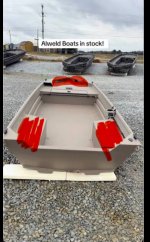
With that said, I know for a fact I called A LOT of companies and spoke with them on the phone about their storage and where the foam was placed in the boat. I wanted max storage and the least amount of foam possible. Foam just gets water logged anyways when boats get wet. We all know this to be true. Lets all remember I bought my boat back in 2018, and boat companies could have changed a lot of their design to present day. So I dont want to sway @Dustin L from exploring all manufacturers when he makes a decision on a boat. I just know the homework I went through, the hours i spent looking and calling companies and what was told to me. The guys at alweld were probably the most helpful in trying to explain to me at the time. Ive also been around a lot of aluminum hulls and seen their storage compared what I have in mine. No question my havoc has the absolute most storage of any boat.

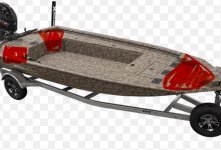
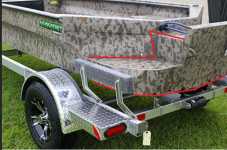
I also went and googled a bunch of pictures of edge, sea ark, xpress, alweld, and havoc. I highlighted where the foam was at in all those boats, and none of that foam is in my havoc on the rear of the boat. My storage hatches are divided by an aluminum wall but 0 foam around the storage boxes like you see in other boats. I also attached a pictured of what the reverse chines look like on my boat.

Now im also willing to admit, chines on boats have never made sense to me either. So im willing to accept you alls reasoning as well. It could be an engineering design that havoc has to get away without using so much foam. They have the oddest shape to their hull out of all other companies. I personally think its kind of ugly, but I dont own a boat for looks, but more for performance. If you notice on their boats, they have a hull that bows out. I can go out to my boat and get a better pic, but I pulled this one off the interwebs. It does have less surface area on the water when up on plane vs other boats because of the hull shape. Now I have my own question.... I know its a 1756 hull but is it 56 at the bottom of the boat before it bows out or is it 56 at the top of rails? Either way, this havoc had the layout very similar to most boats I was looking at when I was to purchase, had the least amount of foam, and offered the most storage of any other company. I was always told chines were the reason, but who honestly knows. I just know there is no rear end foam in the boat. I can get a small child in both my hatches and I know I can get 4 batteries in my battery box. I know its meant to have a gas can there but I ran a gas line from the front storage box back so I could keep the weight of the fuel towards the front of the boat. Anyways, see the pics and the highlights ive attached in where I was finding the foam in all other company hulls vs the havoc that didnt have any of that in those spaces.
 

Attachments

  • IMG_5793.jpeg
    IMG_5793.jpeg
    188 KB · Views: 10
  • IMG_5794.jpeg
    IMG_5794.jpeg
    255.6 KB · Views: 8
  • IMG_5796.jpeg
    IMG_5796.jpeg
    211.7 KB · Views: 8
  • IMG_5797.jpeg
    IMG_5797.jpeg
    259.5 KB · Views: 8
  • IMG_5799.jpeg
    IMG_5799.jpeg
    272.8 KB · Views: 8
  • IMG_5803.jpeg
    IMG_5803.jpeg
    256.5 KB · Views: 8
  • IMG_5805.jpeg
    IMG_5805.jpeg
    582.8 KB · Views: 10
  • IMG_5806.jpeg
    IMG_5806.jpeg
    356.7 KB · Views: 10
Last edited:
I found your google search and found this exact copy and paste you found and posted here.
William,
My typing skills suck, so yes I do copy and paste to reduce/eliminate the amount of key strokes I use.

The
just know there is no rear end foam in the boat
Are you saying there is no foam in your step transom? I'd venture to bet it contains several cubic feet of foam.
1770390043383.png

Havoc boat step transoms are generally designed with built-in flotation foam. The design purposefully moves this flotation foam to the outside pods, which enhances safety while maximizing storage space in the rear of the boat.
Key details regarding Havoc step transoms:
  • Safety and Flotation: The step transom design uses flotation foam for buoyancy.
  • Design Purpose: It frees up space inside the boat by moving foam compartments to the outside.
  • Functionality: These steps offer easier in-and-out access for hunting, fishing, or wading.
  • Storage: Many models, such as the DBST, include storage compartments under the rear seating.
 
William,
My typing skills suck, so yes I do copy and paste to reduce/eliminate the amount of key strokes I use.

The

Are you saying there is no foam in your step transom? I'd venture to bet it contains several cubic feet of foam.
View attachment 73288

Havoc boat step transoms are generally designed with built-in flotation foam. The design purposefully moves this flotation foam to the outside pods, which enhances safety while maximizing storage space in the rear of the boat.
Key details regarding Havoc step transoms:
  • Safety and Flotation: The step transom design uses flotation foam for buoyancy.
  • Design Purpose: It frees up space inside the boat by moving foam compartments to the outside.
  • Functionality: These steps offer easier in-and-out access for hunting, fishing, or wading.
  • Storage: Many models, such as the DBST, include storage compartments under the rear seating.
There might be. Its completely sealed and that would make sense if there was. I know excels flotation pods are not foam sealed and actually have plugs. My boat only has 1 plug vs excels 3 plugs. So the steps could very well have foam, in turn not taking away storage in the boat and packing it around the storage boxes. That makes a lot more sense.

That also is a really good pic of how far out the hull bows out. Kinda fugly imo but less surface area in the water for sure.
 
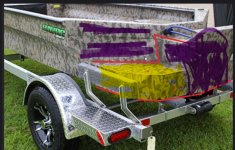
If there is foam in the step, it’s only in the highlighted yellow area. The purple areas definitely don’t have foam. The battery box goes all the way back to the motor mount. And everything above the step is hollow aluminum as I put a rod holder on mine there for catfishing and didn’t drill into any foam when I attached it.
 

Attachments

  • IMG_5807.jpeg
    IMG_5807.jpeg
    283.3 KB · Views: 3
If there is foam in the step, it’s only in the highlighted yellow area. The purple areas definitely don’t have foam. The battery box goes all the way back to the motor mount. And everything above the step is hollow aluminum as I put a rod holder on mine there for catfishing and didn’t drill into any foam when I attached it.
I wasn't sure about the area ahead of the motor mount.
I don't want to come across as ragging on your choice of boat. I was just pointing out that it would have the same or very nearly the same required floatation foam as any other similar size and style vessel. I am actually right now, in conversation with a Havoc dealer concerning my own purchase.
 
Back
Top