Advice on First Back Bay Duck Boat - Devlin BB

Ben L

New member
Hi All.

I'm a relatively new duck hunter (adult onset hunter) who has gotten to the point living in southeast PA of being fed up with what little inland options we have available, and have decided that the best opportunities lie in the back bays of NJ and the Delmarva Peninsula. To address that, I've been looking at boat options. I have had the opportunity to get out to hunt the Jersey marshes with some friends on a variety of occasions and boats; however, most were larger either aluminum or larger Duckwater boats. Those experiences have shown me what I don't prefer - I'd like to find something small and nimble that isn't a production each time I go out. I do not want a boat that I have to think twice about hooking up to the truck and that is easy to store when not using. All that I need room for is me, gear, a springer spaniel, and occasionally a buddy.

I've been looking on a variety of websites for used sneakbox type boats. I recently came across a used Black Brant for sale, which sent me on the rabbit hole which has ended me here. After reading through multiple boat building threads on the forum, articles on sneakboxes and estuary boats, youtube videos (the list goes on), I'm wondering if:

a) Is the Black Brant a good option for someone just getting into tidal bay NJ hunting, or would it behoove me to start with a smaller option, like a Bluebill or Broadbill (or similar sneakbox)?

b) if the one I've found for sale is a good buy.

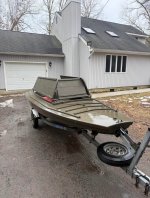
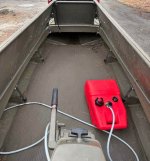
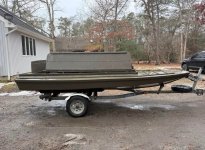
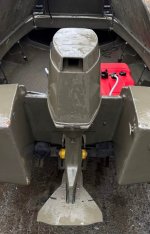
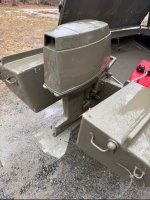
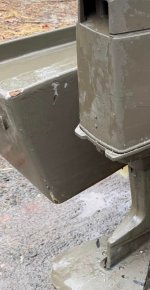
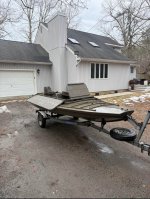
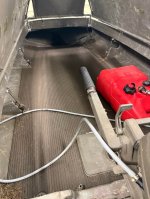
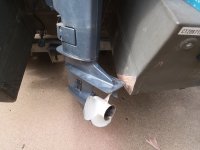
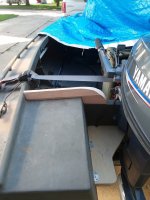
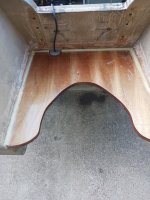
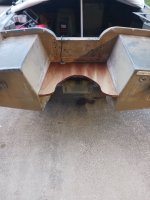
The seller is asking $6k for boat, trailer, and motor. He has title for everything. He is selling because he ended up buying a larger boat. He was up front that there is a little damage on the float pods (visible in pictures), but said everything else is in good condition. Boat was constructed in 2001/2002. Motor is a 2001 Yamaha 30hp 2 stroke. Over the phone he was unable to give me solid details on a builder or owner history (although he did say he knew the previous two owners and could put me in contact).

I go to see it tomorrow and was hoping I could get some advice from folks on the forum (not planning on buying, just looking). At this point, I'm thinking this might be too much boat for me. I'd love to build a boat eventually, but have literally zero experience in anything remotely adjacent to boat building and fiberglass work.

Thanks in advance all.
 

Attachments

  • IMG_5885.JPG
    IMG_5885.JPG
    311.2 KB · Views: 38
  • IMG_5886.JPG
    IMG_5886.JPG
    303.6 KB · Views: 37
  • IMG_5887.JPG
    IMG_5887.JPG
    297.8 KB · Views: 38
  • IMG_5888.JPG
    IMG_5888.JPG
    319.2 KB · Views: 37
  • IMG_5890.JPG
    IMG_5890.JPG
    154.9 KB · Views: 38
  • IMG_5891.JPG
    IMG_5891.JPG
    262.3 KB · Views: 41
  • IMG_5892.JPG
    IMG_5892.JPG
    122.7 KB · Views: 42
  • IMG_5893.JPG
    IMG_5893.JPG
    330.2 KB · Views: 40
  • IMG_5894.JPG
    IMG_5894.JPG
    217.4 KB · Views: 41
Hi All.

I'm a relatively new duck hunter (adult onset hunter) who has gotten to the point living in southeast PA of being fed up with what little inland options we have available, and have decided that the best opportunities lie in the back bays of NJ and the Delmarva Peninsula. To address that, I've been looking at boat options. I have had the opportunity to get out to hunt the Jersey marshes with some friends on a variety of occasions and boats; however, most were larger either aluminum or larger Duckwater boats. Those experiences have shown me what I don't prefer - I'd like to find something small and nimble that isn't a production each time I go out. I do not want a boat that I have to think twice about hooking up to the truck and that is easy to store when not using. All that I need room for is me, gear, a springer spaniel, and occasionally a buddy.

I've been looking on a variety of websites for used sneakbox type boats. I recently came across a used Black Brant for sale, which sent me on the rabbit hole which has ended me here. After reading through multiple boat building threads on the forum, articles on sneakboxes and estuary boats, youtube videos (the list goes on), I'm wondering if:

a) Is the Black Brant a good option for someone just getting into tidal bay NJ hunting, or would it behoove me to start with a smaller option, like a Bluebill or Broadbill (or similar sneakbox)?

b) if the one I've found for sale is a good buy.

The seller is asking $6k for boat, trailer, and motor. He has title for everything. He is selling because he ended up buying a larger boat. He was up front that there is a little damage on the float pods (visible in pictures), but said everything else is in good condition. Boat was constructed in 2001/2002. Motor is a 2001 Yamaha 30hp 2 stroke. Over the phone he was unable to give me solid details on a builder or owner history (although he did say he knew the previous two owners and could put me in contact).

I go to see it tomorrow and was hoping I could get some advice from folks on the forum (not planning on buying, just looking). At this point, I'm thinking this might be too much boat for me. I'd love to build a boat eventually, but have literally zero experience in anything remotely adjacent to boat building and fiberglass work.

Thanks in advance all.
The black brant (2 or 3? looks like a 3 to me) is a good choice for the New Jersey back bays. It has good sea worthiness, but also a small enough to fit into some of your shallow water areas.

That being said, I would not plan on being able to push it off a low tide mud flat. It's probably just a little bit too heavy for that.

The float pod damage could be minor or it could be significant.

I've built several devlins and I own a 16' scaup presently, as well as several Schellinger boats.

The float pods are prone to gathering moisture, and the foam becoming saturated.

The damage on the outside of the pods is probably from when the motor was put up to shallow drive.
On my Scaup I made 45° angle corners to gain clearance for that issue.

The one caveat I see is wood boats, always need maintenance and upkeep.

You would either need to be willing to learn to do the woodworking and glass work or be able to pay somebody to do it.

There are quite a few guys out there in the tri-state region, who do that type of work.
6k sounds close, maybe a little hight to me, but that 30 hp Yamaha 3 holer is my favorite motor, I own 5 of them!
 
Last edited:
He was up front that there is a little damage on the float pods (visible in pictures), but said everything else is in good condition.
The damage on the outside of the pods is probably from when the motor was put up to shallow drive.
On my Scaup I made 45° angle corners to gain clearance for that issue.
Ben,
I have a BBIII and can say it is a very seaworthy and versatile boat. Please note that I am from Iowa, thus not affected by and tides, just the seasonal rising/falling river levels.
Jode is spot on about damage likely from engine in shallow water drive mode. The best repair will also prevent future damage. I trimmed both inside corners with an ordinary handsaw. Then sanded the surrounding area to bare fiberglass, followed by applying new fiberglass cloth over the modified/repaired corner.

20180627_092830.jpg


I have also modified the cockpit combing to extend across the sponsons. Reason for this was, any rain water landing on the sponsons, would drain into the cockpit. Now that water gets directed to the motor well.

1785443374601.jpeg

Another (I feel needed modification) is to add a "splash guard" to the motor well. The primary reason for this is, when the motor is put into reverse, and aggressively accelerated to back up against river current or to back away from a shoreline, water trapped in the motor well, can and will, gush up over the transom and into the cockpit.

1785444119280.jpeg

Here you can see all 3 modifications I have made to the hull. I show these NOT to discourage you away from this particular hull, just to make you aware. The hull itself performs outstandingly, at least for the inland river conditions I use it in. I would not hesitate to operate it in more open waters.

As far as working with a fiberglass/wood hull, it takes basic woodworking and fiber glassing skills. Skills easily learned if you are not already there.
1785444141173.jpeg
 
Last edited:
Thank you both! Appreciate your insight greatly. I’ll be sure to take my time checking over everything tomorrow and take many a picture.
 
Welcome to the DHBP! Lots of members from your neck of the woods, and all over the US who built and use Devlin boats. Stick around and pick our brains on all things duck hunting.
 
Interesting boat. Listen to the other guys regarding feasibility of that design in that area.

Let me learn you about wood boats. They are always projects. They are never done. This is arguably true of all boats, but wood boats are worse. If you just want to fish and hunt with minimal maintenance, get an aluminum.

Now look real close at the guy in the mirror. How many unfinished projects does that dude have laying around the house? If you like projects AND ACTUALLY FINISH THEM, feel free to invest in a wood boat.

Don't buy a wood boat if you don't have a covered place to store it. Mine is tarped out front; the UV, daily thermocycling, and moisture exposure is terrible for it. My list of repairs is twice what it would be if I kept it covered.

Ask the seller what type of ply and resin were used to build it. If the answer is anything other than marine grade ply and epoxy resin, say something about forgetting to turn off your stove and get outa there. Polyester resin and wood are not to be combined together in a boat-shaped form. Every rotten transom and stringer since people first began building floating boxes using Bondo is my evidence, yet people will swear that is how Gran Pappy did it, so they do too.

Nate

PS I'm currently planning my next wood/epoxy composite build.
 
Ben messaged me and we had a dialog about buying a used Devlin. I'm copying and pasting that dialog below for future reference.

I've never been to NJ so I don't know if it is a good fit or not. Probably is in some places, and not in others. Depth of water and bottom type are big drivers. The BBII drafts more than the BBIII. I have a BBII and a Broadbill. I love hunting from the Broadbill but if I could only have one I'd probably go with the BBII for the extra capacity and ability to carry a partner and dog. If I strictly hunted solo over small spreads the Broadbill would be quite lethal and my choice. The Bluebill finds the sweet spot between the two for some. Mine is set up with a dodger and is actually more fun to gun from and it allows me to get out of the wind. I gun the Broadbill over the stern and the BBII over the side.

I've seen poorly built ones and ones abused that required major rework. Unless you are handy with woodworking and epoxy resin, or don't mind learning the craft, I don't recommend you buy a Devlin. Time and time again I see ones built that get left for dead in a backyard with no cover and water in bottom that are put up for sale. Unless they are giving it away they can be nearly as expensive and as much work as building a new one.

If you look at one you have to look over every square inch to assess them. Any place a screw/bolt/fastener went into the hull is a place that water has a path to the wood and will do damage. Any glass crack, common on the hull midway between the chine and keel, or worn spot can let water to the hull. Flotation compartments are notorious for water accumulating and wreaking havoc. The corners of the sponsons where the operator allowed the motor cavitation plate to contact can be a trouble source. Scars from running over hard ground can be a problem. Did the builder truly seal every square inch or cut corners? The list goes on and on. There are just so many ways folks let things go too long. Devlin duck boats are often sold by the original owner and get passed to several non-builders who don't know how to maintain them and just create more problems.

I can't really advise you since I'm not there to see it myself. Some boats are in good shape and the new owner takes care and things are good. Other times someone buys an abused boat and is in over their head. Its not rocket science. It just takes a desire to learn how to maintain them. Epoxy, fiberglass, basic woodworking, painting, etc..

One other thing I forgot to cover was UV damage. A dark painted epoxy glassed boat gets very hot in the summer. The surface temps with the sun beating down can cause the epoxy to soften, melt, or get damaged. When this happens the cloth weave telegraphs and roughens the surface appearance. Direct UV exposure (unpainted areas) will cause the epoxy to break down. I think I'd rather deal with localized water damage than wide area sun damage.

If it sounds like I'm trying to talk you out of this I'm not. What I am trying to do is point out the owner of an ill-kept boat pays a price. They are very durable boats, far more durable than the plywood boats our fathers built from Popular Mechanics plans. Epoxy is a miracle substance. It seems to me there are two camps of folks. Some trust no wooden boat and think all they are is rotten wood waiting to happen. For these folks a cold noisy aluminum boat is their destiny. Others think if it's epoxy it's maintenance free and store it wherever/however you please. They eventually get a rude awakening. The truth is somewhere in between. The best case scenario is a boat that was kept out of the elements and maintained. But we both know many people are cavalier so you have to look close to see how she was cared for.
 
Last edited:
^^^^What he said.^^^^

I forgot to mention that all sealed compartments are waterlogged until proven otherwise, including any foam filled areas under the sole.

Is it poor form to bring a power drill with a 1/2" bit to punch holes in the low corner of each sponson? Asking for a friend.

Nate
 
In defense of wooden boats, water soaked foam is just as much of a problem in aluminum and fiberglass boats as well. Don't even get me started on whoever thought it a good idea to install carpet on top of unsealed plywood soles.
Poor construction doesn't play favorites.
RM
 
RM

100% true. Fiberglass boats are notorious for being built with plywood components not properly sealed. I helped a friend refurb a bass boat last year and we had to make a lot of repairs to the transom and other areas. This was a well known brand of boat but they cut many corners. I think this is typical of bass boats and probably why so many end up in land fills. Sailboats on the other hand end up with @Steve Sanford and get turned into super cool duck boats. :)
 
Unless you are dead set on a wooden boat I would contact a builder about constructing you one out of aluminum with the plans you want.
I unfortunately can’t remember who but a couple of years ago I was able to find someone that was building the broadbill style boats out of aluminum … get the design you want and are a little more durable.

I ultimately decided on a Prodrive for my needs but the wheels turned in my head for a while
 
RM

100% true. Fiberglass boats are notorious for being built with plywood components not properly sealed. I helped a friend refurb a bass boat last year and we had to make a lot of repairs to the transom and other areas. This was a well known brand of boat but they cut many corners. I think this is typical of bass boats and probably why so many end up in land fills. Sailboats on the other hand end up with @Steve Sanford and get turned into super cool duck boats. :)
All~

I had thought of weighing in - the saw Eric's mention of me (!). My point would be to emphasize the same pint others have: epoxy is a wonderful material for its moisture barrier qualities as well as its strength, ease-of-use, etc., however, that wonderful moisture barrier can trap moisture in wood as well as keep it out. I began searching on W.E.S.T. to remind everyone that "WEST System" began as an acronym (wood epoxy saturation technique). Despite (or because of) AI-assisted Google etc, I could not find such a reference - until my post here from 2020 popped up:

https://duckboats.net/community/threads/bbiii-re-build.331783/page-2

I have yet to build a stitch-and-glue - though I have the seminal books from both Gougeon Brothers and Sam Devlin - but I use epoxy on almost every boat I build or restore. IF I am encapsulating wood, I am meticulous about making sure that each item gets multiple, careful coats and that any perforations (as for hardware) are thoroughly sealed with either epoxy of 3M 5200.

My biggest concern in purchasing (or surveying) a Devlin or other stitch-n-glue boat would be the infiltration of water into the plywood where it can migrate in ideal conditions for (so-called) dry rot. As others have advised, be sure your survey/inspection scrutinizes every square inch of the vessel.

Hope this helps!

SJS
 
I began searching on W.E.S.T. to remind everyone that "WEST System" began as an acronym (wood epoxy saturation technique).
Steve,
Thanks for sharing this. I had no idea "WEST" SYSTEM was an acronym! Like we used to say on the railroad when someone complained about not having enough seniority to hold a certain job, "You (in this case, I) should have left the farm sooner."
RM
 
Last edited:
Hi All!

Thank you so much everyone for your responses and insight. Can’t believe how much feedback was offered.

I only have a few minutes now, but I’ll post a longer update at a later time. Short story is that I looked, saw some stuff that made me hesitant, didn’t make an offer and likely will not make an offer on that boat.

Ben
 
Back
Top