A few pics from up at the farm getting ready...

Mark(mo)

Active member
Started putting water on the place last week, things are starting to take shape.
Main pool about 80% flooded
DSCN0657.jpg

A few teal have found the water along with a pile of shorebirds and snipe!!
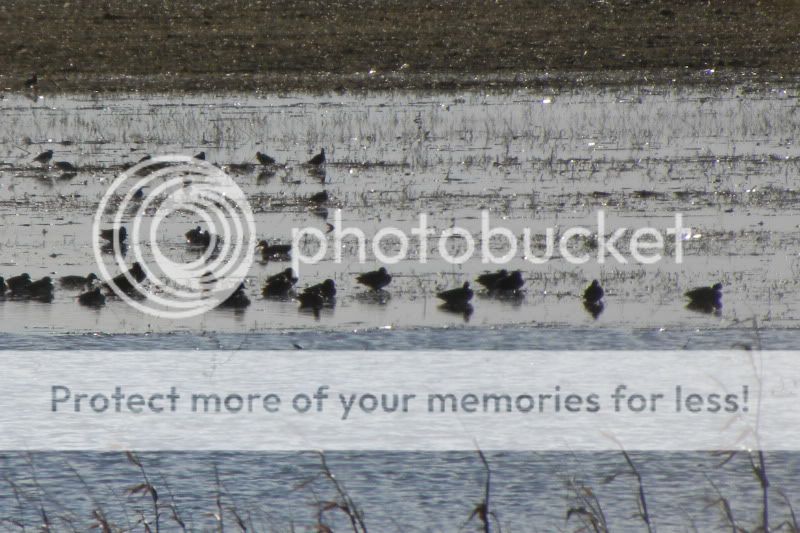
DSCN0661.jpg

Also syphoning water over the levee into my woods
DSCN0658.jpg

Free 4”pump,hehehehe
DSCN0659.jpg

North end looking back south at the main pool. I left some beans up here we’ll see how much they like them??
DSCN0666.jpg

Looking East along the new ditch connecting the NE corner.
DSCN0667.jpg

NE corner, they’ve like the area in the past when I got some heavy rains to put a little water in it. There is more water in it now than ever during duck season. Good place for ground blinds around the edges.
DSCN0664.jpg

 
This farm is 212 acres. It has 22 acres of WRP (the woods that are being flooded) the remainder is raparian corridor and ag ground. I have enrolled 40 acres of the ag in CP 31 (bottomland hardwood restoration) I'll be planting 12,000 trees (oak, walnut, hickory, pecan) this coming March on those 40 acres. The other farm is 420 acres that I am partners with Ira and his brother in. It is all in WRP and is located about 60mi. north northwest of this farm.
 
Mark, your habitat management looks interesting. A couple of comments about soybeans. The birds will eat soybeans but they have difficulty digesting them because of enzyme inhibitors in the beans. Also mortality events have been recorded in Canada geese when feeding on dry soybeans. The dry beans hang up in the bird's esophagus and aren't digested. Under certain conditions the birds will continue to feed on them until they are completely full and will die of starvation.
 
Brad,
I've heard the impaction stories and have seen geese impacted on grasses too, not many geese use this farm until everything else is frozen. I don't have that much info on ducks and beans other than I've shot a bunch over it. The majority of the food is wild millet, hairy crab grass, fall panicum, and some pigweed. There is a good stand of toothcup but not sure it will provide much food.

The state areas flood beans every year around here so I figure I'm not too off base. It's more of an experiment to test the bean rotation managment. If it had dried out I would have planted jap millet and not left any beans but I couldn't get in due to wet fields so I went with what mother nature delivered.
 
As long as there is water available the beans should be a problem. Its dry beans. I can provide you a bunch of scientific papers and reports on the problem with dry beans.

The rest of the treatments all look good and it looks like you have set the table for the birds. I hope you have a good season.
 
As long as there is water available the beans should be a problem. Its dry beans. I can provide you a bunch of scientific papers and reports on the problem with dry beans.

The rest of the treatments all look good and it looks like you have set the table for the birds. I hope you have a good season.


Can he lubricate the beans, maybe a little vasoline on each one before he feeds his pets?
 
Tod in order to impact the esophagus I think you have to put them in the mouth.


There you go Mr. Professionsal Waterfowl Biologist taking all the fun out of it :(. And to think I was going to suggest KY.
 
Tod in order to impact the esophagus I think you have to put them in the mouth.


There you go Mr. Professionsal Waterfowl Biologist taking all the fun out of it :(. And to think I was going to suggest KY.
Thats not the first time that has been said about me. But I don't really want to know the details of what happens between University professors and ducks behind closed doors.
 
You know KY is water soluble, I doubt it would have as many adverse effects as a petroleum based lubricant. What about one of the new Soy based lubricants or would that cause more of the same kinds of problems?hehehehe
 
Mark,
your work has come a long way from those first shots of the scrapers setting the grade on the dikes. It looks like the water is going to do the job for sure this season.
I still like seeing that old silo in the background.
Thanks for showing us the before pictures.
Cant wait to get a chance to sit in a KARA on one of those fields in a few years.
 
Back
Top