Decoy Rehab Cont-Hail Steve Sanford

Robert Van Sant

Active member


I am continuing the total rehab of my decoy spread. This past week I prepped my dozen mallards with repairs, varnish and a top coat of oils. I painted one hen to see if I had the colors and technique as outlined in Steve Sanford’s tutorial. I also was able to repair and rehab a pair of LL Bean Goldeneyes per Steve’s web site. These guys were in rough shape. I replaced one tail, replaced eyes on both birds, sanded the heads down to bare wood, carved a little bill detail, patched holes, and then finished them with the “Sanford” method for sealing and painting.
Steve I would be interested in your critique on the hen mallard. I am also a little apprehensive about starting the drake mallards. Can you share with me some details on the drake’s colors? Do you use the “Elephant Skin” on the flanks as well as on the backs? What color do you use on the cape feathers? Can I mix oils with the latex? It appears that the blending is almost a burnt umber which I have in tube oils. Any help with the drake paint scheme will be greatly appreciated.
Best,
Robert
 
Robert~

Just got back from a very busy 4 days on Long Island - so I apologize for not getting back to you sooner.

Everything looks great! When I first glanced through your post, that one Hen Mallard sure looked familiar. The only thing I would change would be to streak the white tails with brown. They are more camouflaged than the drakes' white tail.

I will go check your Elephant Skin question in a bit. I see I did not identify the Behr colors for the drakes. In any event, the back and sides are base-coated with the same medium, warm grey.

As George, mentioned, you cannot mix oils and acrylics directly together. On the other hand, I use acrylics over fully-cured oil prime coats frequently. If you will mostly be using acrylics/latex houseaints as topcoats, you may want a few tubes of acrylic for tinting occasionally.

Thanks so much for posting your fine progress!

SJS
 
Robert~

The medium warm grey for the Drake Mallard back and sides is, indeed, Behr Elephant Skin, PPU18-16. In fact, I wrote "Drake Mallard" right on the label.

The brown for the cape,the "triangles" that flair outward from the centerline of the back, and the soft edges of the scapulars and tertials is the same as I use for Black Duck bodies: Behr Espresso Beans PPU5-01. It is not critical, though. You can certainly use the same brown you used on your Hens.

Although I neglected to include the color codes in every instance, I think the rest of my Tutorial describes the painting on each section:

http://stevenjaysanford.com/re-painting-l-l-bean-coastal-blacks-and-mallards/


On the other hand, feel free with any specific questions. And, I plan to paint some more cork Mallards over the next month or so - so I'll try to capture more of a step-by-step approach.

SJS
 
Steve,
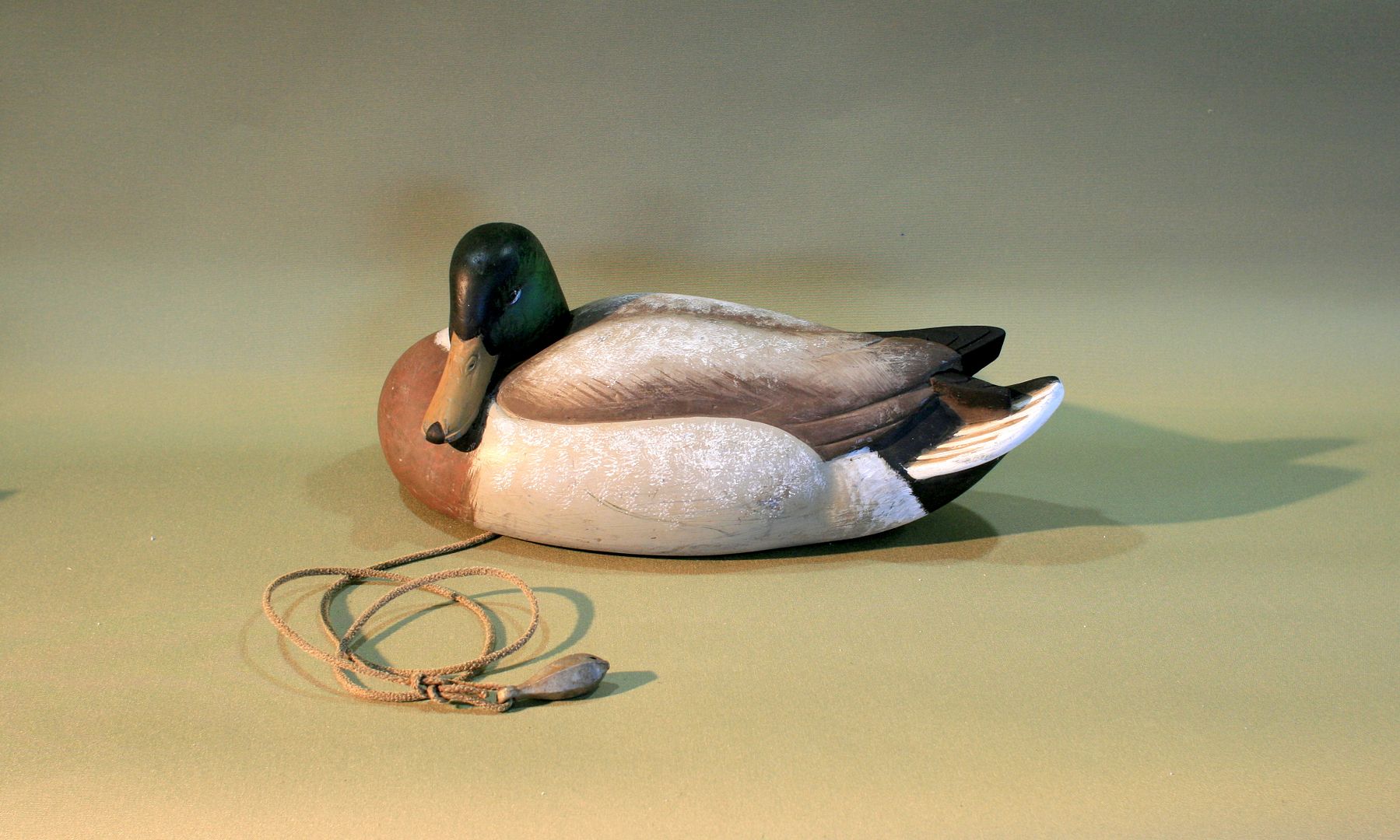
Thank you for the reply. Also thank you for the inspiration to undertake this endeavor. Your tutorials are the reason I decided to rehab my 30 year old rig. Below is my attempt to “copy” your effort.
Based on your suggestion( and the kind email from George with a paint schedule) I got a couple of tubes of acrylic paints in Burnt Umber and Raw Umber.
Here is what I used:

Head; Bher latex color CHARD

Bill; Plaid color Yellow Ochre

Territals (sp?); Bher Elphant Skin blended with raw umber tube acrylics, also the defining stripe between these and the flanks are raw umber

Flanks; Bher Graceful Grey

Cape; Burnt Umber mixed with Bher Black Suede

Blacks; Bher flat Black

Whites; Bher Flat White

Based on George’s suggestion I pulled a mounted bird off the wall and decided that the flanks and the back were different colors of grey, the flanks being slightly lighter. I noticed in your Gadwall tutorial the Graceful Grey and gave it a go.

I believe I achieved what I was looking for.

All this was done per your tutorial over a decoy sealed with spar varnish, tailboards coated with epoxy, and the bodies base coated in oils and allowed to dry for a week. (A painful wait for an anxious novice).

As with the hens, I painted one drake before committing to the group. All that being said, what think you?

Oh and BTW I copied the “curl” on the tail based on your pics. Nice detail.

Big sigh of relief. I can finish these and then on to the cans. Four to repaint and eight to carve and paint!

Best Wishes,
Robert


Good morning, Robert~

Those Mallards all look sweet! Congratulations!

Regarding the tone of the Drakes' sides and back, I actually use 2 tones - as you did on the back (tertials and scapulars). I use a darker base (Elephant Skin) and then stipple highlights on with a lighter tone (Graceful Gull). This technique suggests the vermiculation and gives the "silvery" look that Mallards show when fully plumed.

Here is one of my E. Allens:


E%20Allen%20Mallard%20Drake_zpsv9te1ieo.jpg


All the best,

SJS

 
Back
Top