
It is a boat not a bagel…

tod osier

Well-known member
Supporter
Far too often I see pictures here of sloppily applied marine sealant and even worse white marine sealant being used on a duckboat. If your boat looks like a bagel that is on you (or whomever you paid too much to apply the sealer) because it is so easy to fix with a rag and some appropriate solvent.

The SS Poppyseed
1774961482810.jpeg


You don’t want your boat looking as tacky as this mailbox do you?

1774961501824.jpeg

Of the adhesive sealants, I like original 5200, I like the consistency and workability. The curing time gives you plenty of options to work with it and it is known to hold up over decades of hard use. I’ll choose black 5200 every single time. To clean it up, you need a rag and an appropriate solvent. The solvent needs to be a non-polar solvent like mineral spirits, not alcohol or acetone.

Mineral spirits
1774961537707.jpeg

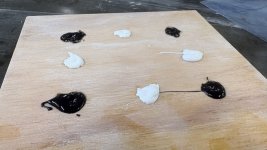
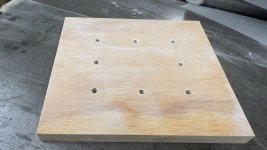
Epoxy coated ply ready for sealant. Notice the heavy countersink that will hold the sealant and leave a formed in place “O” ring of sealant under the washer. Were this on my boat, I’d epoxy seal the countersunk area and the hole.
1774961592993.jpeg

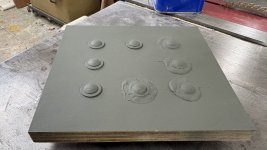
Sealant applied
1774961616665.jpeg

Sealant cleaned up or left “natural”
1774961655173.jpeg

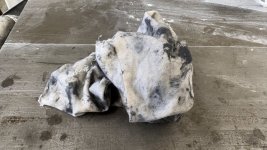
Rag with 5200 - you can maintain clean hands and workpiece by rotating the rag and folding the used material away inside the rag. As messy as I see some of these boats covered with smears of sealant, I wonder what is going on.
1774961757508.jpeg

With paint.
1774961712845.jpeg

With simulated wear (a quick hit from a fine wire brush). Notice how tidy the cleaned up sealant looks on the top bolts and washers be it white or black. Also notice how easily the paint came off the 5200 compared to the painted epoxy encapsulated wood. You can see where the paint is burnished by the wire wheel, but is intact compared to where it is on the rubbery sealant and comes right off.
1774961857980.jpeg

When you are done with your sealant put it in the freezer and it will last for years and years. With these moisture cured polyurethanes, I've found that if they are liquid they will cure properly no matter the date. I've had great results from tubes that were hardened front and back, but I've cut into them to find some good stuff in the middle and it worked well.
1774962113439.jpeg
 

Attachments

  • 1774961682175.jpeg
    1774961682175.jpeg
    30.1 KB · Views: 6
Far too often I see pictures here of sloppily applied marine sealant and even worse white marine sealant being used on a duckboat. If your boat looks like a bagel that is on you (or whomever you paid too much to apply the sealer) because it is so easy to fix with a rag and some appropriate solvent.

The SS Poppyseed
View attachment 75155


You don’t want your boat looking as tacky as this mailbox do you?
View attachment 75156

Of the adhesive sealants, I like original 5200, I like the consistency and workability. The curing time gives you plenty of options to work with it and it is known to hold up over decades of hard use. I’ll choose black 5200 every single time. To clean it up, you need a rag and an appropriate solvent. The solvent needs to be a non-polar solvent like mineral spirits, not alcohol or acetone.

Mineral spirits
View attachment 75157

Epoxy coated ply ready for sealant. Notice the heavy countersink that will hold the sealant and leave a formed in place “O” ring of sealant under the washer. Were this on my boat, I’d epoxy seal the countersunk area and the hole.
View attachment 75158

Sealant applied
View attachment 75159

Sealant cleaned up or left “natural”
View attachment 75160

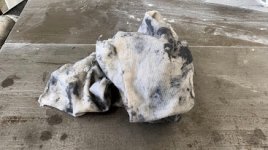
Rag with 5200 - you can maintain clean hands and workpiece by rotating the rag and folding the used material away inside the rag. As messy as I see some of these boats covered with smears of sealant, I wonder what is going on.
View attachment 75163

With paint.
View attachment 75162

With simulated wear (a quick hit from a fine wire brush). Notice how tidy the cleaned up sealant looks on the top bolts and washers be it white or black. Also notice how easily the paint came off the 5200 compared to the painted epoxy encapsulated wood. You can see where the paint is burnished by the wire wheel, but is intact compared to where it is on the rubbery sealant and comes right off.
View attachment 75164

When you are done with your sealant put it in the freezer and it will last for years and years. With these moisture cured polyurethanes, I've found that if they are liquid they will cure properly no matter the date. I've had great results from tubes that were hardened front and back, but I've cut into them to find some good stuff in the middle and it worked well.
Tod~

Poppy Seed Bagel - Toasted - with Vegetable Cream Cheese and Bacon - a "hearty breakfast" only for those days when you know you will be burning off all the calories and cholesterol.....like a late-season gunning day.

When I first moved here. I made a nice wooden mailbox - Pine painted white to complement the Federalist architecture of our old farmhouse. After 2 or 3 rebuilds - the box having been shattered by snowplows and at least once by the Highway Sup't Hisself on a frond-end loader, I now use a steel box - bought from my lumberyard. But, it is mounted on a "breakaway" arm so's it can survive most vehicles attacks. The 4x4 post nests inside a buried wooden (treated) box - with a single wedge to keep everything snug. Of course, I do not want any of my vessels looking like that mailbox. I need sweeping sheers, high-crowned decks and other sea-kindly shapes.....

I, too, am a devotee of 3M 5200. I have used White. Black and Mahogany - with the last being my preference for most gunning vessels. I used Black to seal my roof rack to my Element. It outlasted the Yellow Poplar rack (Lesson won the hard way re that species outdoors...).

sm Element with Canvasback 3L.jpg

Although usually a bit more $$$, the first coat of duckboat paint often wears off. I sometimes sand the cured 5200 with 150 or 220-grit paper, but time also provides a more receptive surface.

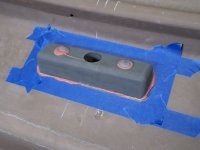
Working clean can be tough. I mask when it is convenient - and I always want some squeeze-out all around the piece.

sm - Tierney - deck block squeeze out BETTER.jpg

I use paper towels to remove most of the excess - then toss them away from the workspace until they harden up - for the trash or the stove. I wear latex gloves during the first cleaning but almost always rely on my bare index finger to shape the fillet I want around the edges of the hardware, motorboard, rubrail, coaming, etc.

Good tip about the mineral spirits. My chemistry is a bit timeworn. I'm guessing "non-polar" indicates Temperate Zone solvents??? (Turps is clearly Temperate Zone - but has gotten way to expensive to use as a mere solvent.)

All the best,

SJS
 
Tod

Try not to run that rag through the wash with the rest of your laundry until the 5200 globs cure. Don't ask me how I know that.
I bet that makes a mess. If I'm working on a serious project, I often keep the rag in a plastic bag to use it multiple times, but for sure that is a one way path for a rag towards the trash.
 
Tod~

Poppy Seed Bagel - Toasted - with Vegetable Cream Cheese and Bacon - a "hearty breakfast" only for those days when you know you will be burning off all the calories and cholesterol.....like a late-season gunning day.

When I first moved here. I made a nice wooden mailbox - Pine painted white to complement the Federalist architecture of our old farmhouse. After 2 or 3 rebuilds - the box having been shattered by snowplows and at least once by the Highway Sup't Hisself on a frond-end loader, I now use a steel box - bought from my lumberyard. But, it is mounted on a "breakaway" arm so's it can survive most vehicles attacks. The 4x4 post nests inside a buried wooden (treated) box - with a single wedge to keep everything snug. Of course, I do not want any of my vessels looking like that mailbox. I need sweeping sheers, high-crowned decks and other sea-kindly shapes.....

I, too, am a devotee of 3M 5200. I have used White. Black and Mahogany - with the last being my preference for most gunning vessels. I used Black to seal my roof rack to my Element. It outlasted the Yellow Poplar rack (Lesson won the hard way re that species outdoors...).

View attachment 75188

Although usually a bit more $$$, the first coat of duckboat paint often wears off. I sometimes sand the cured 5200 with 150 or 220-grit paper, but time also provides a more receptive surface.

Working clean can be tough. I mask when it is convenient - and I always want some squeeze-out all around the piece.

View attachment 75189

I use paper towels to remove most of the excess - then toss them away from the workspace until they harden up - for the trash or the stove. I wear latex gloves during the first cleaning but almost always rely on my bare index finger to shape the fillet I want around the edges of the hardware, motorboard, rubrail, coaming, etc.

Good tip about the mineral spirits. My chemistry is a bit timeworn. I'm guessing "non-polar" indicates Temperate Zone solvents??? (Turps is clearly Temperate Zone - but has gotten way to expensive to use as a mere solvent.)

All the best,

SJS

I never mask with the 5200, I just find that it cleans up well enough that it is more efficient not to worry about it, slather it on and wipe it off. Sometimes I do see some staining on really flat paint, but I'd prefer 5200 then paint.

I don't think you will do all that well searching "temperate zone" solvents ar the big box store, but I will say "non-polar" is easier to spell then "equatorial". I know you were joking, but there are a lot that work that most people already have (google is their friend, just not water, acetone or any of the alcohols). Mineral spirits is cheapest and least smelly. I'd bet gasoline would work well, but I'm not going to try it.
 
Back
Top