Photography Tips, Tactics and Equipment

All,
Here we go, let's open up this forum and ping some of the excellent photographers on here to start helping out those of us with "less than stellar" aesthetic senses. If you have questions on equipment, camera settings, compostions, post processing etc, post it up here and hopefully we can receive some wise inputs from this community.......and oh, let's see some of those practice shots and results as well!! Thanks.

Dave
 
Good lighting and getting the distracting crap out of the background are two keys....dry birds help the picture


Good gear is nice... but not required. That being said I shoot a Nikon D200 & D300s
 
Nikon D200

Nikon 16-85 VR

Nikon 70-300 VR

Nikon 50mm 2.8

You gotta love digital

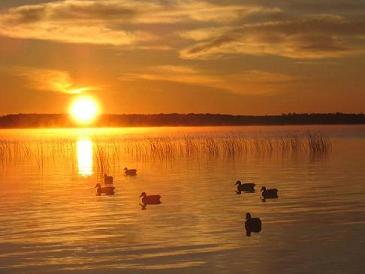
BHlastmorningsunriseexcellent4.jpg

 
Last edited:
Here are a few tips:

If using a zoom or if your a bit shakey as I am use a tripod. There are some very small table top type tripods that can be used that dont take up a lot of room in your blind bag.

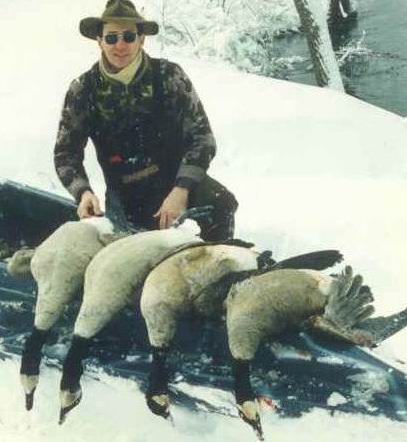
When shooting pictures of your days take dont do it in your driveway or the concrete of the launch. try and find a nice background such as some nice grass by the launch or trees in the background. Take a few seconds to wipe the blood from your kill or pose it so that the minimal amount of blood is visible. Push the tongue back into that dead deers mouth. You get the idea. Taking these extra steps will make the picture that much more appealing and one that you can share with others. Nothing will put off non-hunters than to see blood and guts all over the picture.

For cameras that require adjustments to the aperature or speed like the older SLR's or the newer high end digitals. Try bracketing your shots, take a picture one f stop higher and one lower than what the cameras meter tells you. This will allow a difference in the depth of field and the result maybe a picture that shows a little more detail or is just more appealing. You cant tell much from a 1.2" LCD display on the back of a digital camera so you should try some different settings once in awhile you'll be surprised at the results.

Dont forget that even the point and shoot digitals have the capability of zoom. Try zooming in a little doing this takes away some of the background and makes the shot more interesting at times.

Remember in outdoor photography you want the viewers eye to be drawn to the subject. sometimes a branch in the foreground will draw the eye to the subject your photographing.

Most importantly read your manual if you have one! If your serious about taking quality pictures do some research, read about it, browse the magazines. Look at photgraphs by others and get ideas from them. Their are a few very good photographers here on the site look at how they compose their shots. Steve for one has a very good eye and composes his shots well.

Take lots of pictures! Professional photographers will take hundreds of shots just to get that one special one.

an example of zooming in, it makes the shot a little more interesting.
View attachment IMG_0924sm.JPG

Here is an example where I placed the camera right on the ground. Changing your perspective will give you much nicer results.

View attachment mushsm.JPG

enjoy taking pictures and have fun at it! Take lots of pictures teh more you take the better you will become.

 
Nikon D100/Nikkor 18-200mm
Nikon D200/Tamron 18-270mm

The Tamron is probably one of the best lenses I've ever owned & it's rating are through the roof!!!
 
OK, I shoot a Canon XSi with the kit lens 18-55mm and have a Canon 70-300mm ISM lens (wish I could afford L stuff). Anyway, my problem is birds in flight. I have been practicing swinging with the birds, different speed settings, etc. I can't get good clear shots like Gary, Hitch, Steve and others get. HELP!!!!!
 
I shoot a Canon 40D with the 28-135 kit lens as well as the 100-400 L lens. I have clear flight shot problems as well, but I also and not the nest on which settings are best for certain situations. Thanks.
 
For flight pictures are you on automatic? If so the camera maybe setting the shutter speed too slow to stop the wing beats. If your panning with the bird a higher shutter speed will still be needed to stop the action of the wing beats. Some digitals have a "sport" setting which allows a higher shutter speed to slow the action down.
 
I am panning with the setting 1 (horizontal) stability on and in shutter speed mode. I set the shutter speed as fast as I can get for the lighting conditions and then try different settings around that. I think my panning skills aren't as good as my swing through in shooting skills, but I am not sure. Any thoughts?
 
try taking stability off and see if that helps. the camera maybe trying to over stabilize the shot. when panning a flying bird you are usually panning horizontally and vertically as the birds lifts into the air.
 
I'll try. Now that the MIGRATION HAS STARTED, maybe I'll get to practice more than on something other than freakin songbirds.
 
I thought I would bump this back up to the top with a list of some of the cameras and lenses I have:

35 mm:
Canon AE1, 50mm, 70-210mm
Pentax SPII 50mm, 100-500mm
Yashica FR1 55mm, 135mm, 75-150mm, 28mm wide, 2X teleconvertor

Special:
Pacemaker Crown Graphics (picture the newspaper reporters camera from the 40's)135mm lens 4 X 5, 3 1/4 x 4 1/4, 2 1/4 x 3 1/4 these were the plate sizes

Digital: Canon A530

Wish I could afford a hi-end digital, maybe if I sell off the 35's but probably wont get much for them in this new fangled digital age. ;)
I do love the 35's and still have a full darkroom with enlarger etc. but its been in the attic for the last 10 yrs :( But I am getting the itch to set it back up but chemicals and supplies are harder to get these days.
 
Last edited:
Mike, I would drool over that Pentax 100-500 If you ever thinking of SLR digital look at Pentax. The cameras are backward complatable with any lens Pentax made. Pentax made some of the best glass out there and it is usable on their digital bodies. The 35mm Pentax bodies were some of the best. I have a Nikon 35mm when I shoot film, but digital went with Pentax more bang for the buck. All the digitals Canon, Nikon, Sony,Pentax are good. You have to kick the tires before going with any system. $$$

Buy the way if you ever decide to sell that 100-500 Pentax I think you have a buyer. Hee hee

I have a Sigma 100-300 F4.5 and haven't gotten a teleconverter yet. Could use a little more reach sometime.
 
That Pentax is my favorite simple to operate and still takes great pics. I still have an Argus C3 (1/2 the guys here probably never heard of it) it was my Dads. He bought it when he was in Korea. That was my first 35mm used it till the cocking spring broke back in the 70's. Its packed away somewhere in the attic. :)
 
Take lots of pictures but ... with a purpose. When I really "got" into photog and did it professional as well, I took thousands of pictures (35mm SLR & Medium format stuff) and keep a log of every shot with all the data necessary. That's how you learn to repeat what you've done. After a while, it all becomes natural and easy.

Then....learn composition. Take the shot in your head before you put a camera to it. Some of the stuff you see on this forum from Sutton, March & MLBob (& others as well) shows great composition. Think of the barn shot Sutton posted......composition, cropping & focus can change the entire shot.

The best advice I got was that a sign of a great photographer is that he only shows his BEST photos. Take lots & lots of shots (very cheap now with digital), track your info & show ONLY your best shots. ;)
I shutter to think (pun intended) about all the money I've spent on developing. Fortunately, when I was teaching, I had a photo lab adjacent to my chem. lab and developed a lot of my own stuff. Too much fun.

Almost forgot, remember that the camera is not the expert. You are. You can have the best equipment and still not get good shots. Just like the best brushes are no good without the hand and mind of the painter. BE the expert.
Lou
 
Last edited:
For you guys wanting to get some BIF (bird in flight) shots, I strongly suggest that you use aperture priority (Av on Canon models). Av mode allows you to change the aperture (depth of field) while the camera will automatically set the shutter speed to achieve ideal exposure. If shutter speed is too slow (1/500 is generally minimum to freeze BIF) you can bump your ISO up to increase shutter speed. For low light situations (early morning, overcast or dyour reary days) you will likely have to bump your ISO to 640 or higher (depending on your equipment as well).

It can become a little tedious, but for those that really would like to improve their photos, I suggest at least reading up on some basic photography terms, definitions and tactics. Becoming familiar with even the basics will improve your skills more than you can possibly imagine.

You can still get good shots with less than ideal light if you learn about your camera and its limitations - these are from a snow storm and a dreary day a couple days later - hardly desirable light. Both in hunting situations as well.

IMG_1703.jpg


IMG_1768.jpg


IMG_2154.jpg


IMG_2027.jpg


Shoot in RAW when and if possible as well - post-processing can make a mediocre shot into a great one

KCsnow.jpg


This is using fairly low end equipment as well - Canon 30D w/ 28-135mm lens - hardly "Pro" equipment.
 
Back
Top