
Al Hansen
Well-known member
As the mirgration of hummers is now in full swing, the feeders are being visited almost constantly now. This year our rufous adult males arrived a week early which I thought was interesting. The two varieties that move through this area would be the calliope and rufous hummers. The first to migrate happen to be the adult males. Normally any females that we have now would be from the two varieties that nest here. They are the black-chinned and the broad-tailed hummers.
These two sets of pictures will show you that most hummers are very fiesty! There is a lot going on when they are at a feeder.
Al
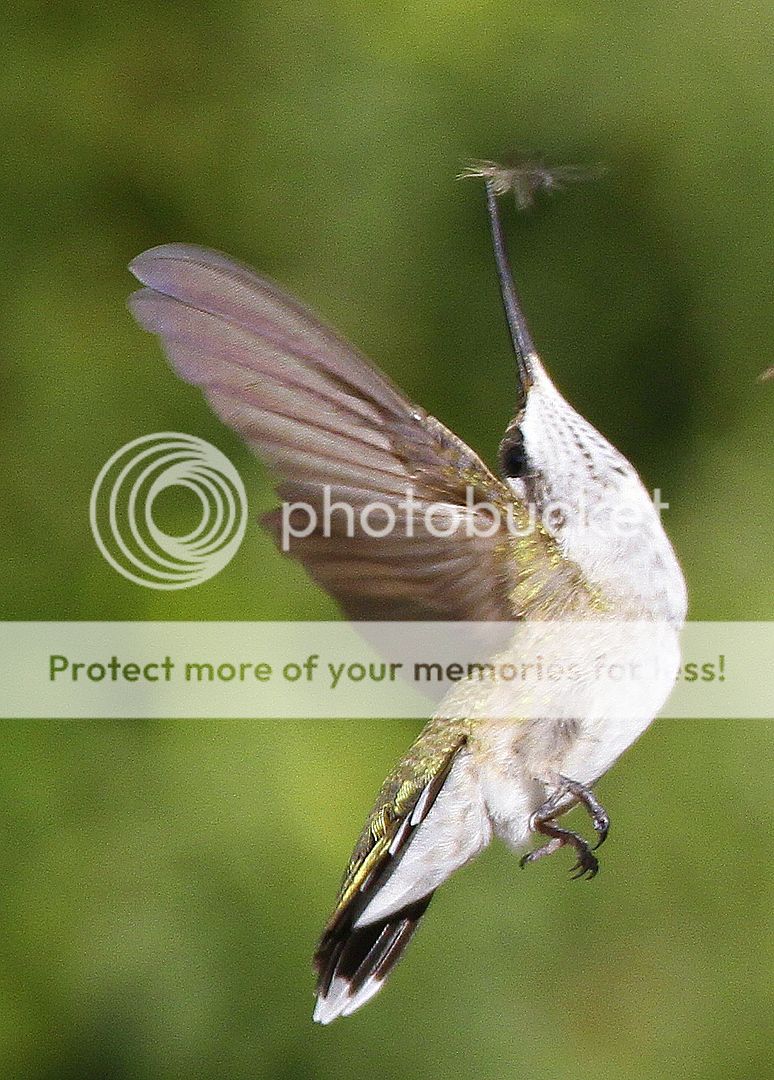
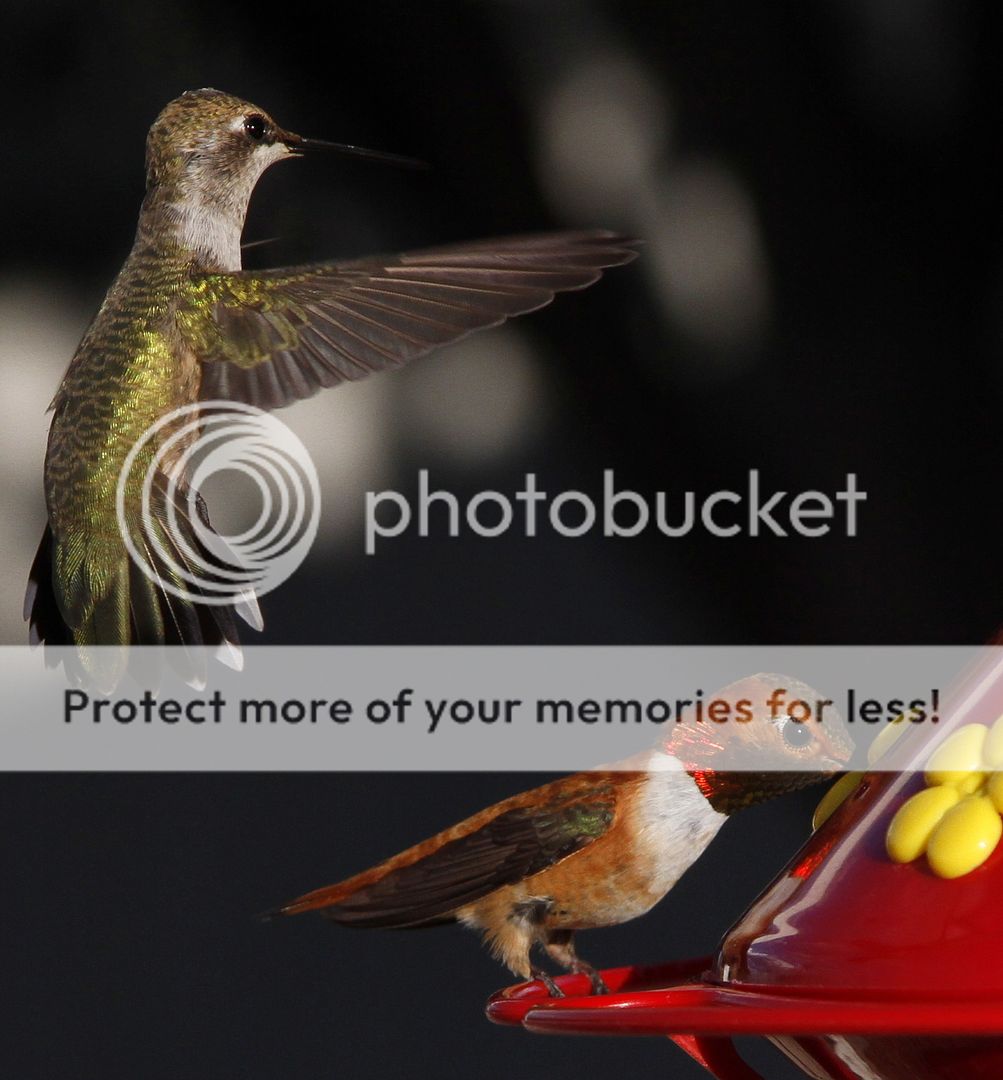
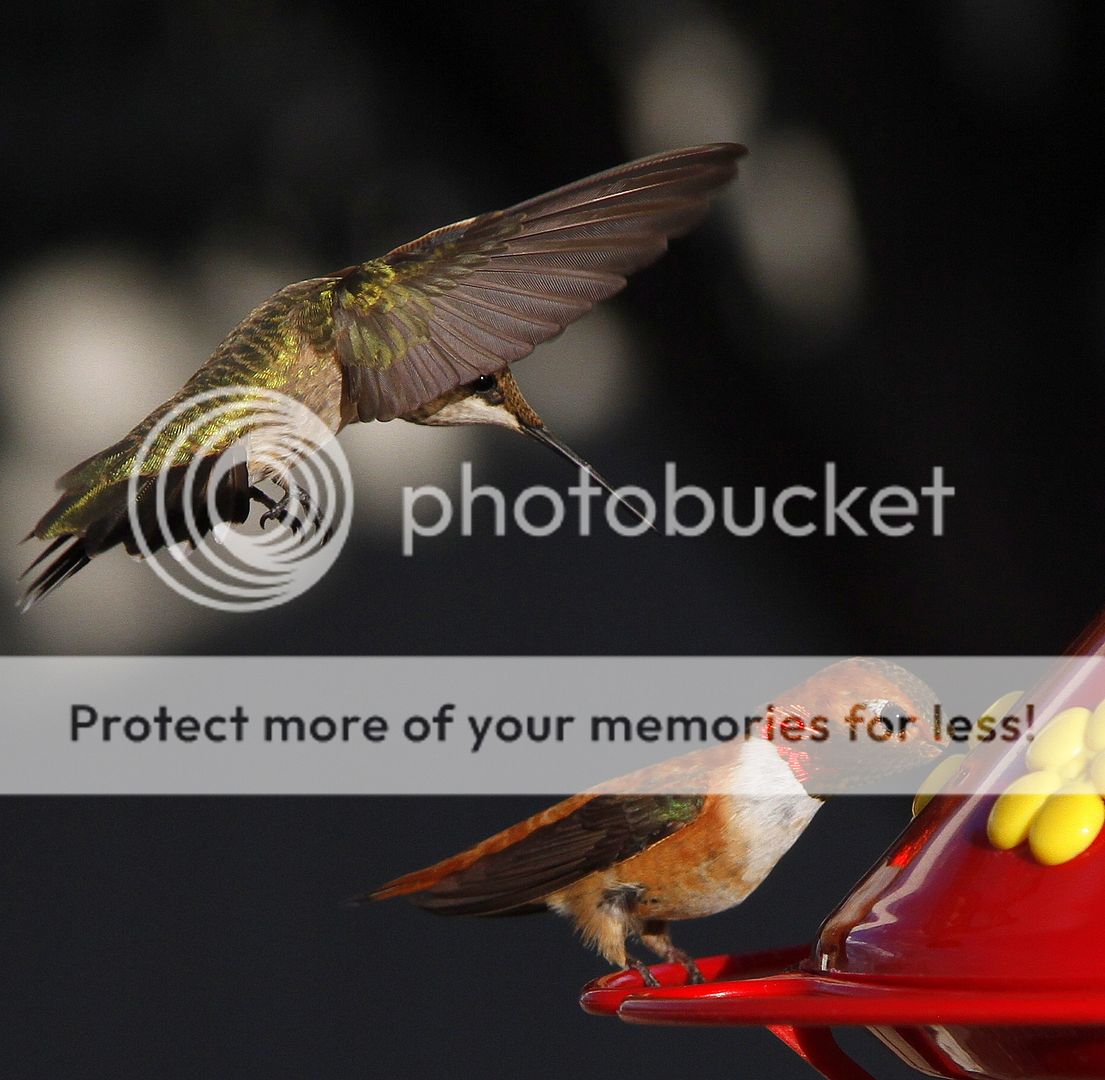
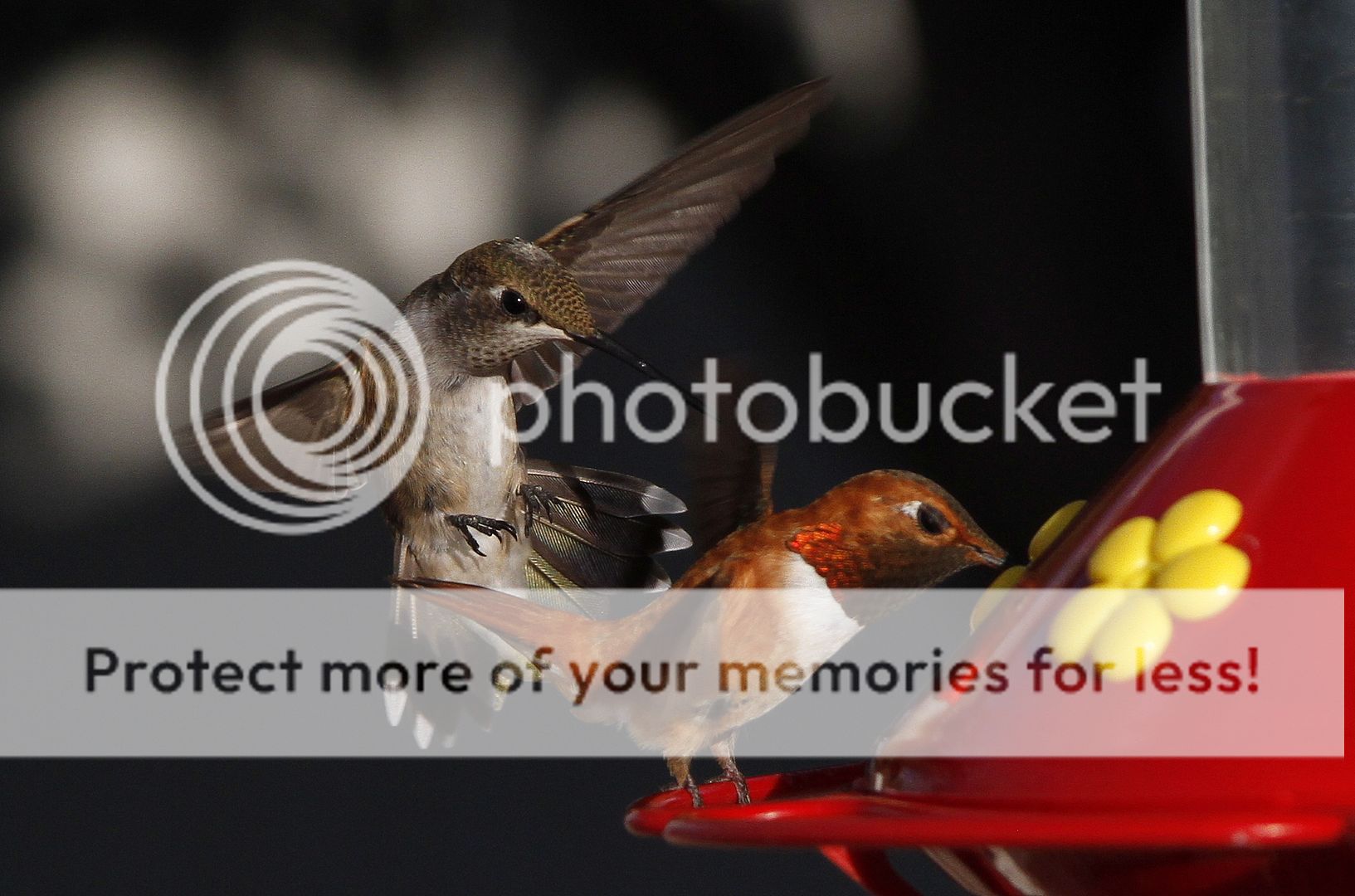
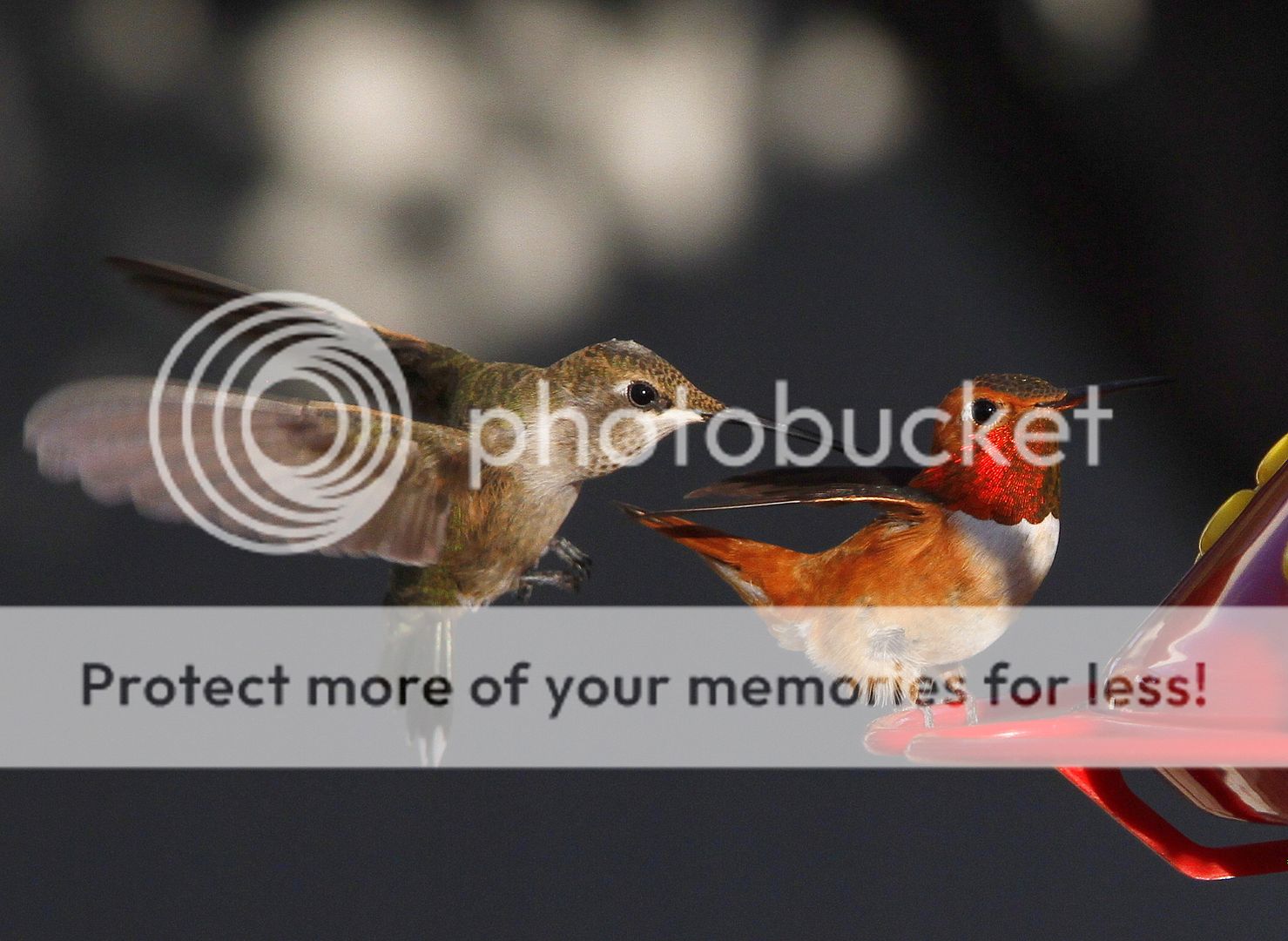
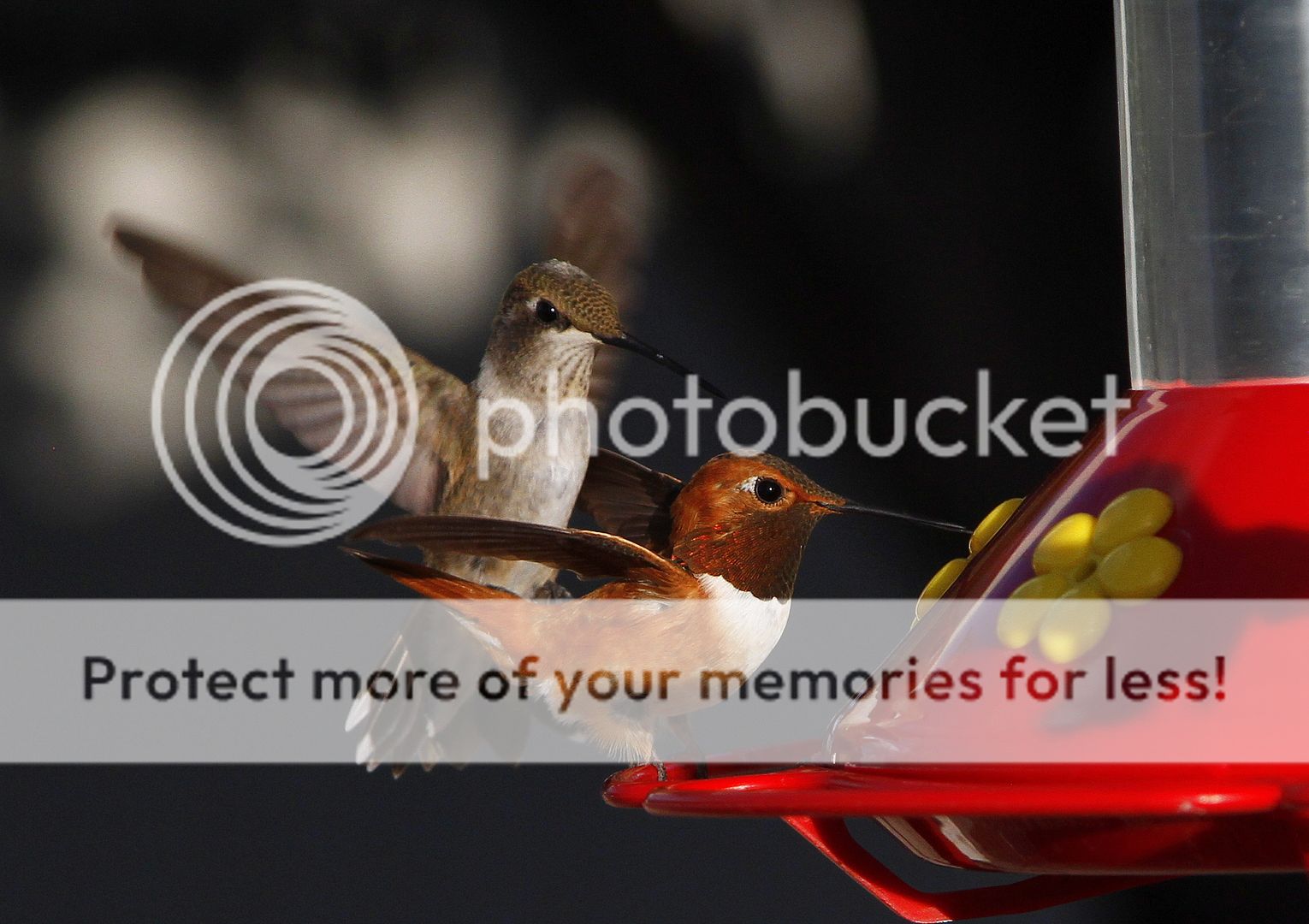
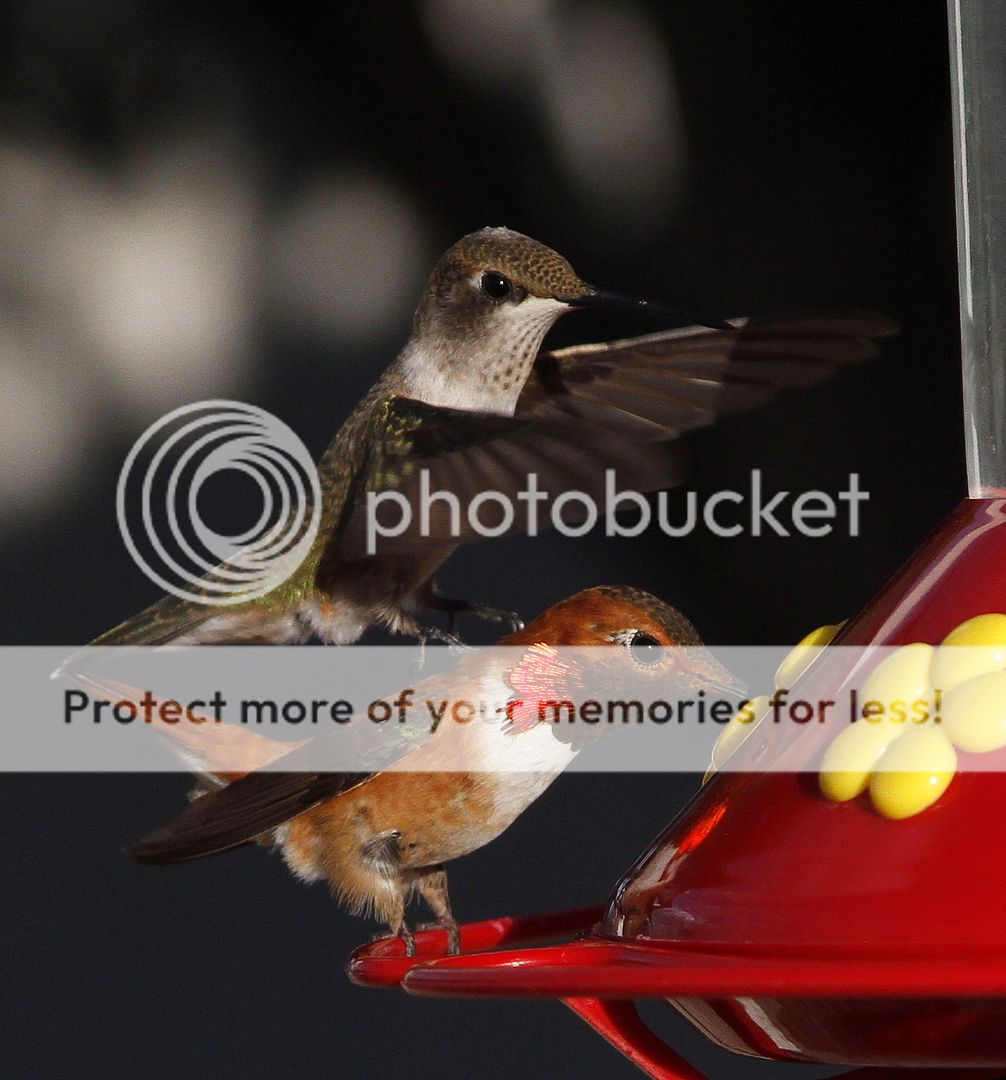
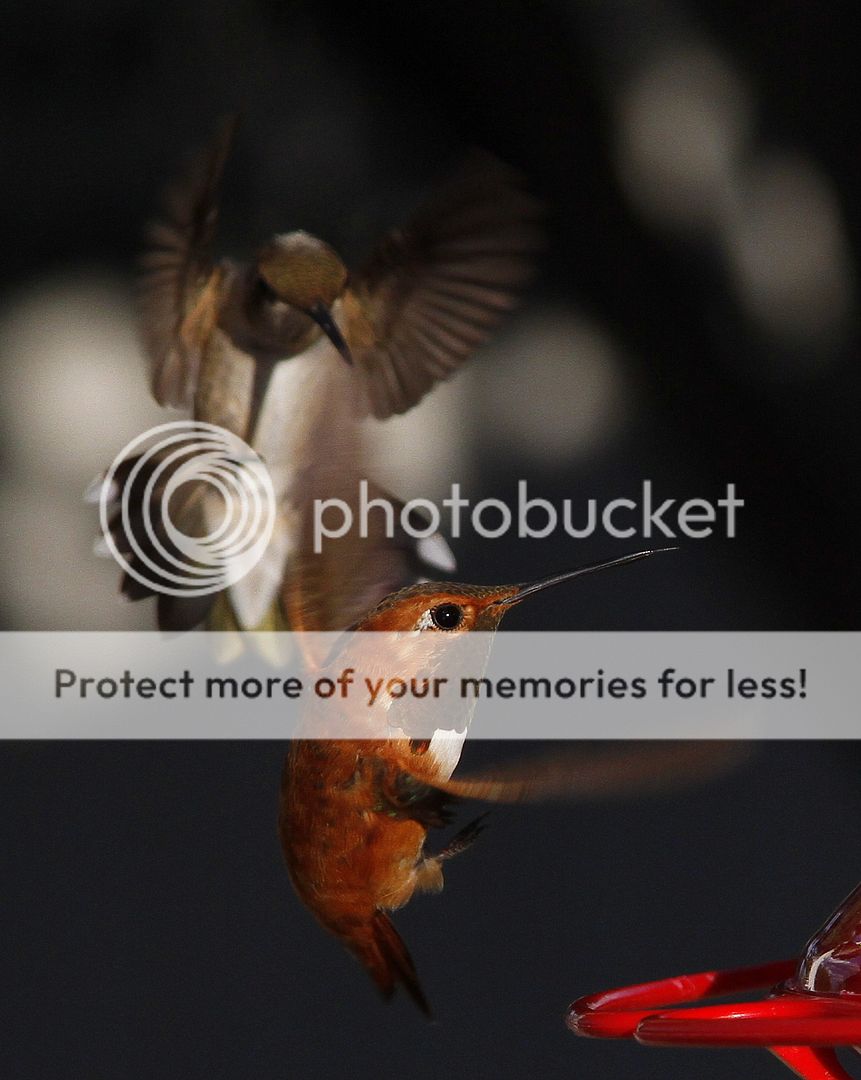
In this series of 7 pictures, I took a total of 17 picture that took just a hair over 2 seconds with the burst mode I was using. The adult female black-chinned hummingbird will intimidate if at all possible. She normally is much large than any of the males that we have so that is her ACE. I'm sure she also must think that this is her feeder since she has most likely been here since the beginning of April. The adult male rufous, with his bright orange gorget, didn't seem to pay much attention at first but finally gave into her pesky ways.
I was sitting in a patio chair 3 feet from the feeder. The feeder was hanging down to the same level as I was so it was but a mere 28 inches off the ground. I was using a 24-105mm L lens with my Canon 7D. The time of day happened to be right after supper around 6:30PM
 [/URL]
 [/URL]
 [/URL]
 [/URL]
 [/URL]
 [/URL]
 [/URL]
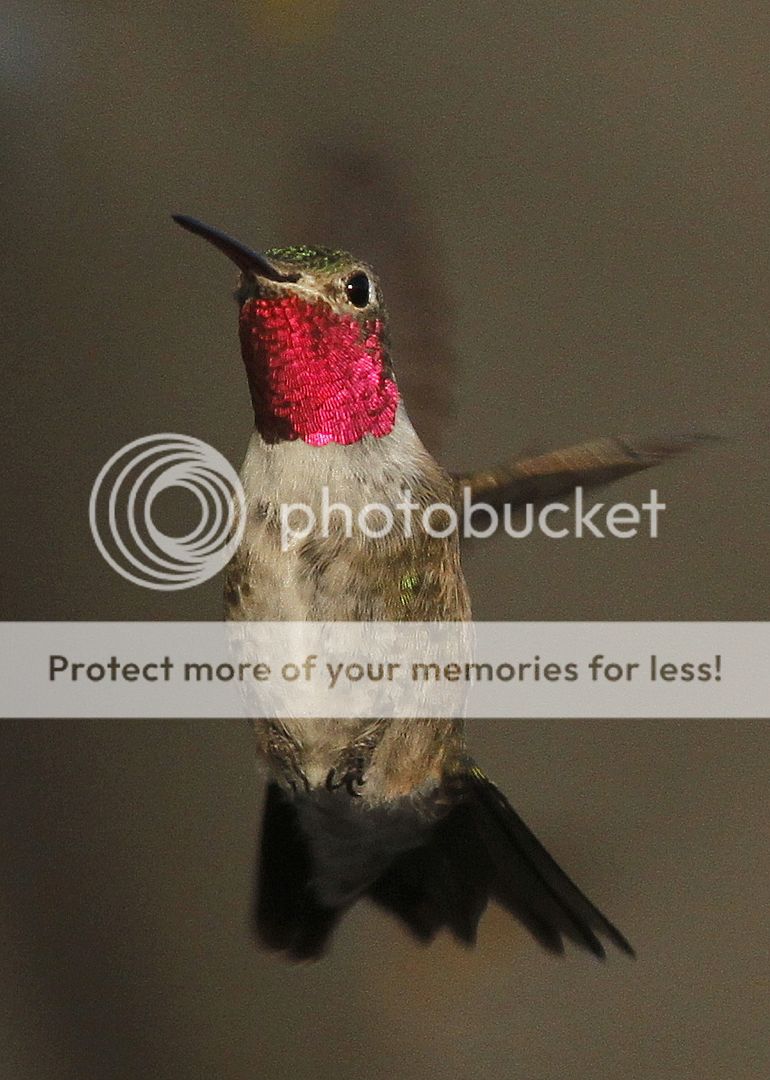
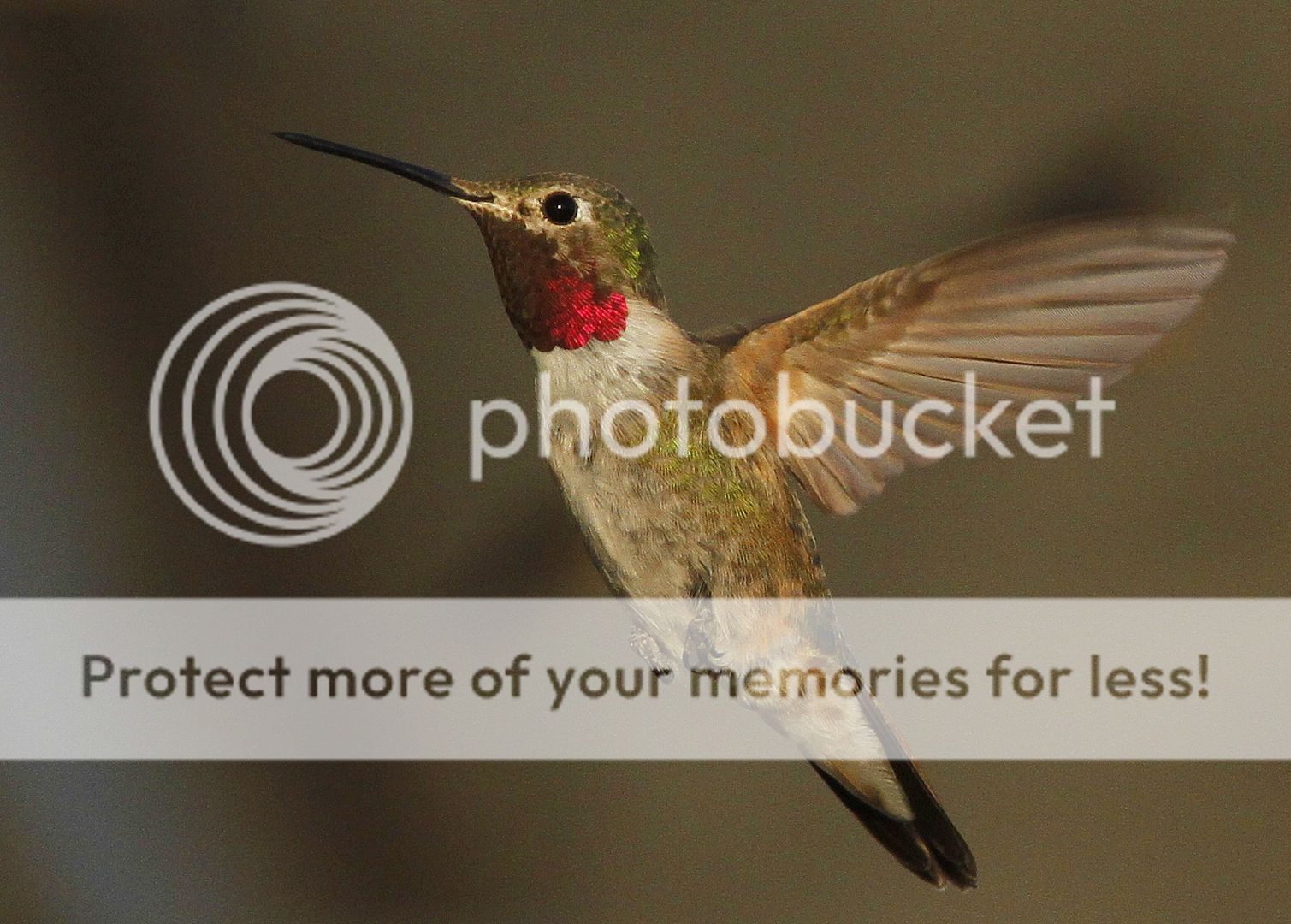
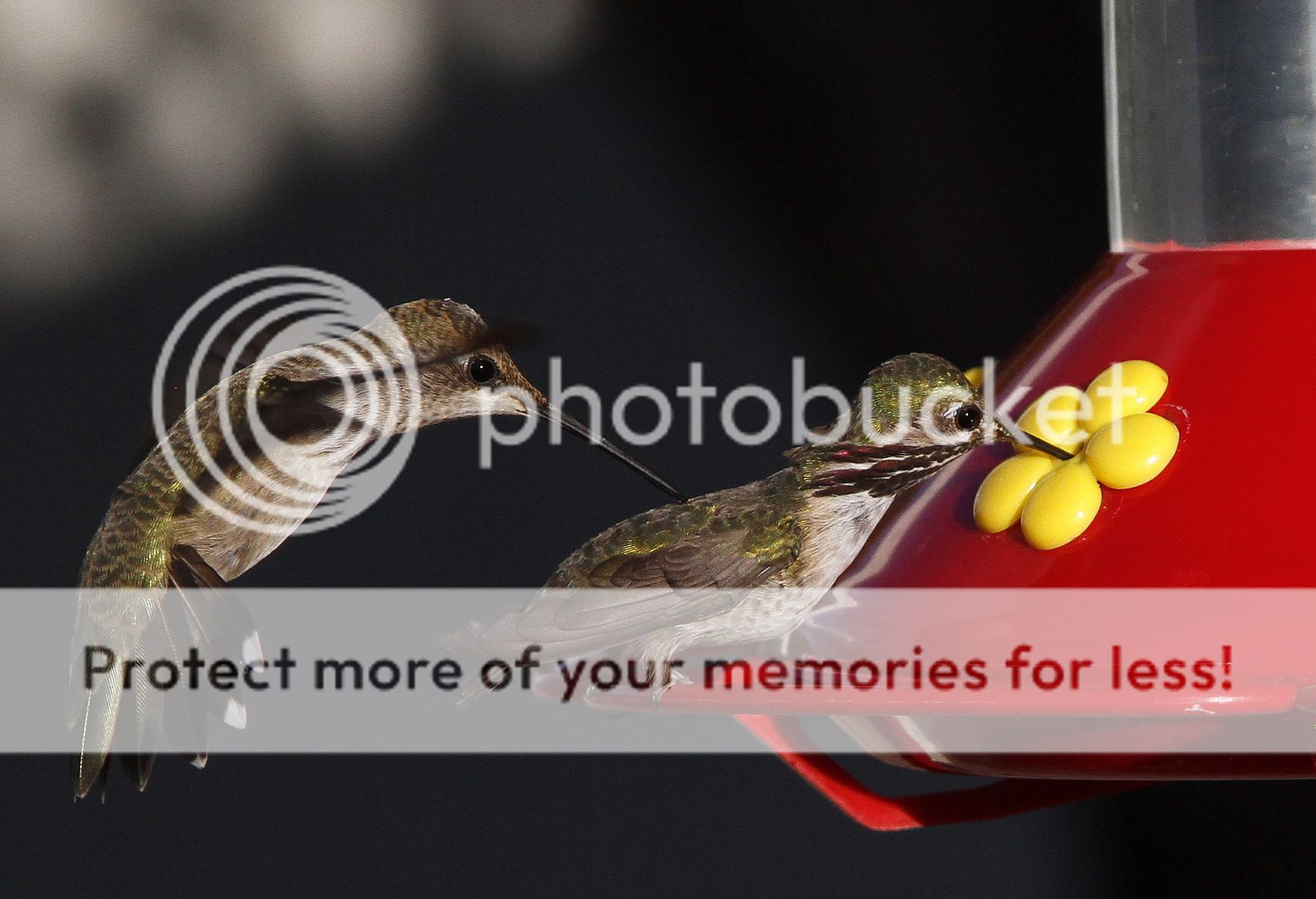
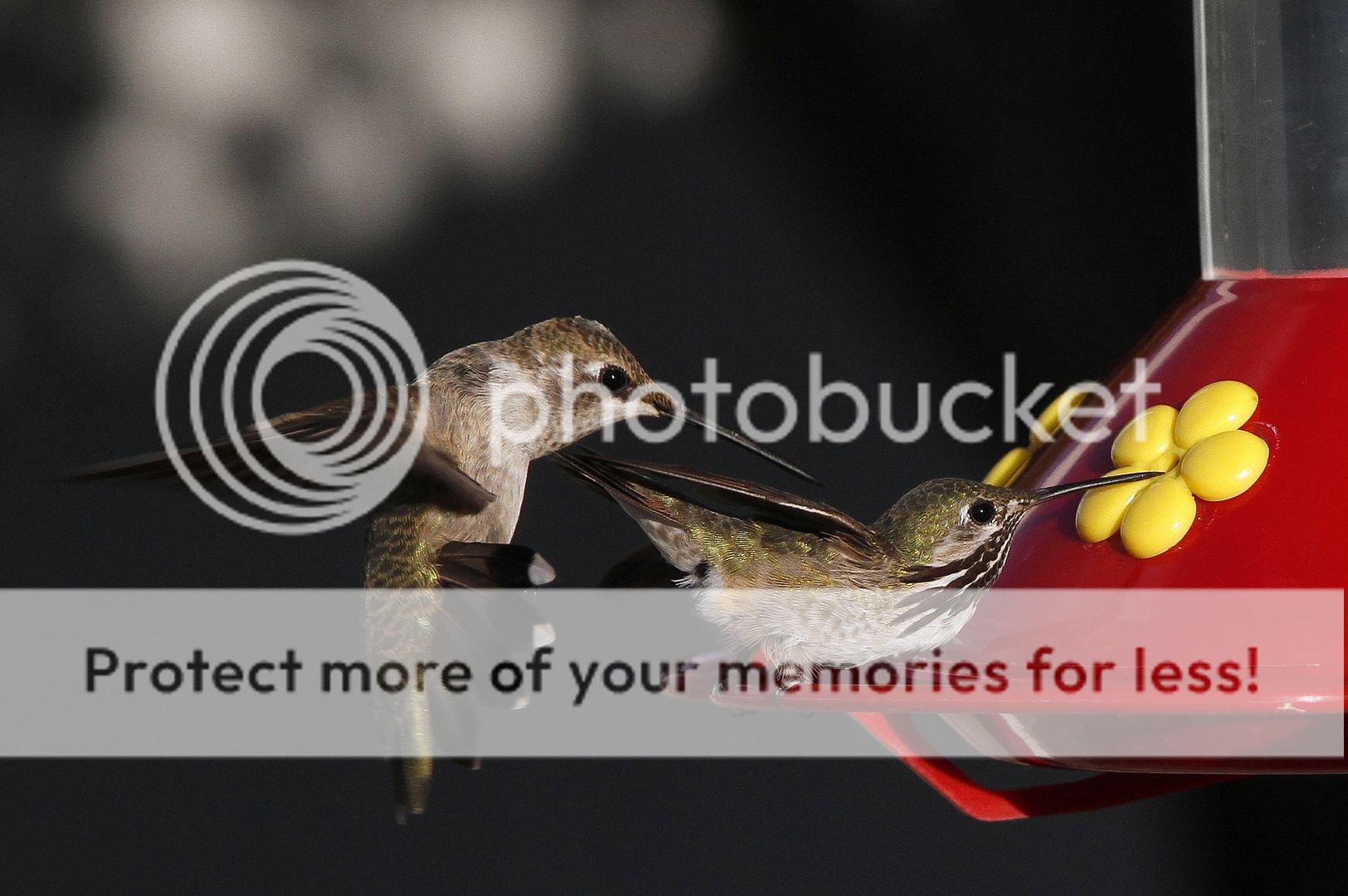
The last set is just two pictures. Guess what? The aggressor is another or the same adult black-chinned female. This time she was picking on North America's smallest bird which is the adult male calliope. He is just 3 1/2 inches long. Notice that "big mama" is using her beak and it worked like a charm. Normally spears do!
 [/URL]
 [/URL]
These two sets of pictures will show you that most hummers are very fiesty! There is a lot going on when they are at a feeder.
Al
In this series of 7 pictures, I took a total of 17 picture that took just a hair over 2 seconds with the burst mode I was using. The adult female black-chinned hummingbird will intimidate if at all possible. She normally is much large than any of the males that we have so that is her ACE. I'm sure she also must think that this is her feeder since she has most likely been here since the beginning of April. The adult male rufous, with his bright orange gorget, didn't seem to pay much attention at first but finally gave into her pesky ways.
I was sitting in a patio chair 3 feet from the feeder. The feeder was hanging down to the same level as I was so it was but a mere 28 inches off the ground. I was using a 24-105mm L lens with my Canon 7D. The time of day happened to be right after supper around 6:30PM
The last set is just two pictures. Guess what? The aggressor is another or the same adult black-chinned female. This time she was picking on North America's smallest bird which is the adult male calliope. He is just 3 1/2 inches long. Notice that "big mama" is using her beak and it worked like a charm. Normally spears do!
Last edited: