
Michael McCord1
Active member
Oh to be a grouse hunter back then…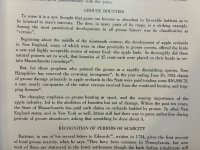

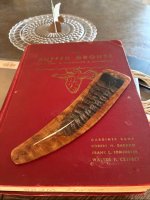
Oh to be a grouse hunter back then…View attachment 77345
I still hold cautious optimism. We’re at the edge of range in Tennessee and still have some hanging on. One thing that’s true for any gamebird east of the Mississippi is you won’t have good populations of any of them on accident anymore. We have to intentionally manipulate the land to their benefit or accept their disappearance. There’s no middle ground.In the 1960's and 1970's there was No Bounty, thank goodness. During the late Grouse Season in Ohio the first places that we would ask for and get permission was at Apple Orchards. The birds were "budding" and the hunting was fantastic, most times in very deep snow. These same orchards would not give us permission to hunt rabbits as they feared the trees might take some shot. Of course we complied.
To say I like Ruffed Grouse hunting is an understatement. I was addicted. Prior to my retirement in 2010 I slowly replaced my grouse hunting attire from head to toe to as my old gear was in tatters. Lo and behold I retired and the Ruffed Grouse population Crashed. It didn't just tapper off, it Crashed. A few years back I had a discussion with a NY DEC Game Bird Biologist. She flat out told me "You will not be alive if and when the Ruffed Grouse population rebounds." I pretty much got the same report from PA. Damn Shame. I had many good years Ruffed Grouse hunting. I used to here a few Drumming while I fly fished for trout here nearby. Have not heard it in 2 years, and I sure do miss that Sound. The habitat is there the birds are not.
Steve,Michael~
Truly fascinating! I had never heard anything about this phenomenon.
I have not heard a Ruffed Grouse drumming hereabouts (eastern NY - not far from Vermont and Massachusetts) in about 10 years. I have read that West Nile Virus is the likely cause of the decline.
All the best,
SJS
No webbing, fair enough! I’ve been digging into it pretty hard recently and that paragraph really stuck out for someone in an edge of grouse range state.Michael~
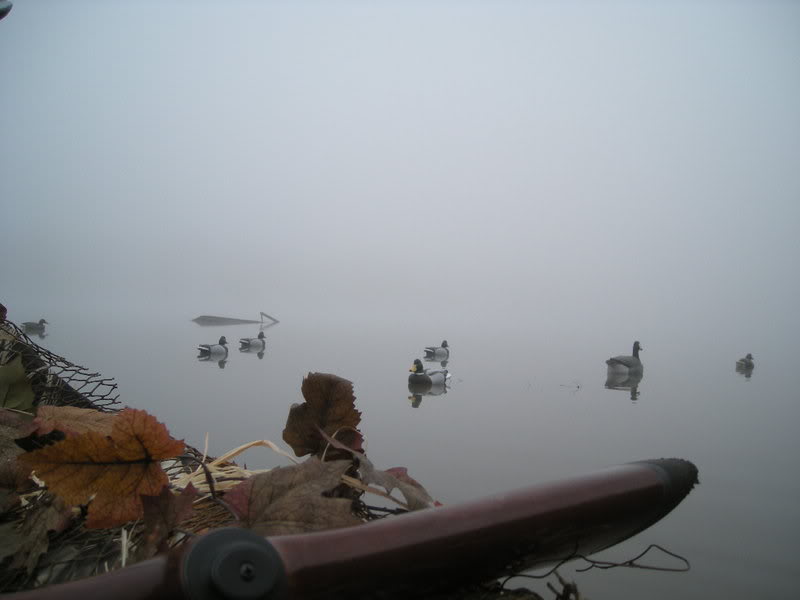
Now I am really embarrassed - I own that very book! I confess, though, that I never did read it cover-to-cover. The fatal flaw with Bonasa umbellus is the species' complete lack of webbed feet.....
All the best,
SJS
We saw the decline of quail in our area in the 70s. Alfalfa was replaced with fescue and the seed plant meadows became more soy bean and corn production. Timbers were clear-cut for crop production and predator hunting and trapping declined. The Quail did not survive. My father and I tried raising Quail for 2 years. We released 200 over two years in a timber area we had permission to hunt. The third year we decided to hunt a few. We didn't find any.Similar to bobwhites across the southeast.
I wonder if populations of both grouse and bobwhites weren't "artificially" high to begin with due to 1. past traditional farming practices (bobwhites); 2. intensive logging along with all the immature second growth forests (grouse), and 3. combined with heavy predator trapping before the fur market took a header in early 1990s (both)???
There’s no doubt whatsoever that modern land use isn’t conducive to ground nesting birds at allWow.
I cannot imagine being in the woods in northeast PA in the spring and not hearing a male grouse drumming in every direction.
Sucks to hear about the population crash. But between warming weather, habitat changes and West Nile, and the lack of trappers thinning predators, its not hard to see why its happened. Similar to bobwhites across the southeast.
I wonder if populations of both grouse and bobwhites weren't "artificially" high to begin with due to 1. past traditional farming practices (bobwhites); 2. intensive logging along with all the immature second growth forests (grouse), and 3. combined with heavy predator trapping before the fur market took a header in early 1990s (both)???
Pen raised quail have abysmal survival (1% or less) but recently there has been success relocating wild birds into places where the habitat is being managed intentionally and at scale.We saw the decline of quail in our area in the 70s. Alfalfa was replaced with fescue and the seed plant meadows became more soy bean and corn production. Timbers were clear-cut for crop production and predator hunting and trapping declined. The Quail did not survive. My father and I tried raising Quail for 2 years. We released 200 over two years in a timber area we had permission to hunt. The third year we decided to hunt a few. We didn't find any.