Saskatchewan Follows Manitoba

I can only speak for myself, but hunters that choose an outfitter are not only the rich and famous, as seems to be the stereotype here. Our clients are a mix of the economic spectrum; some dentists, some firefighters. To be fair, we are at the lower end of the price range in the province. There are definitely some that only the wealthy could afford. Wealthy or not, they choose outfitters partly because they tried freelancing and prefer to pay someone else to do the scouting while they shoot. They can get more hunting in a shorter period of time. Plus our cooking is better than you'll get at any restaurant!
Their dollars spent here contribute to the economy just the same as a freelancer's.
I promise this is my last response to this thread.

I won't argue with your points on the client mix. Nobody is seriously arguing outfitters don’t provide value or that their clients are all wealthy. The choice itself is legitimate either way. Some hunters prefer having someone else handle the scouting, logistics, and cooking. Others see all of that as part of the hunt: the scouting, asking landowners for permission, putting out a viable decoy spread, reading the birds, calling them in, and then processing your harvest. Both groups exist, and that’s fine.

What I’m talking about is the mechanism and the timing. Alberta limits license length and huntable zones. Manitoba caps nonresident license numbers. Saskatchewan is moving to short-term licenses. All of these changes reduce how long nonresidents can hunt and how much ground they can cover. Those regulations aren’t driven by biology. Migratory bird harvest is managed at the flyway, national and continental levels. If the concern were resource protection, the tools would be bag limits or season timing. Instead the focus is on who can hunt, for how long, and where. That’s access policy.

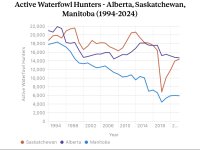
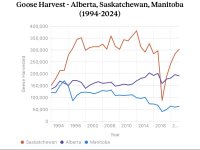
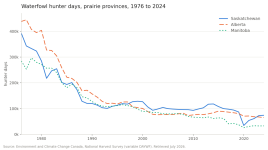
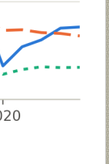
The timing of these changes is telling. These restrictions are being implemented after years of declining resident participation – there are 50% fewer Canadian hunters now than 30 or 40 years ago – and freelance nonresident hunting has increased. Goose harvests climbed while hunter numbers fell. That’s not a resource being overharvested by freelancers. Fewer hunters were simply hunting more effectively under liberal bag limits. Bag limit restrictions or limiting season dates would have been imposed if there was an overharvest concern. Manitoba’s nonresident license numbers barely changed over 45 years. Their share of the duck harvest went from 10 percent to over 50 percent because Canadians stopped hunting, not because more Americans came. If hunter pressure were truly the concern, these caps would have come decades ago.IMG_4689.jpegIMG_4688.jpeg

Restrict freelance access enough and some of those hunters become outfitted clients. The rest either stop coming to Canada altogether or hunt within the restricted license timeframes. Either way, the outfitters face less competition for clients and less competition for access. That’s the intended outcome, and it benefits a specific segment of the industry. Follow the money.

Both freelancers and outfitted clients bring money into rural Saskatchewan, Alberta and Manitoba. But freelancers spread it more broadly: more towns, more motels, more fuel stops, more small businesses across a wider area. Restrict that and you haven’t protected the birds or fairly managed access to the land. You’ve redirected rural spending from small businesses across the landscape to outfitting operations.
 
I promise this is my last response to this thread.

I won't argue with your points on the client mix. Nobody is seriously arguing outfitters don’t provide value or that their clients are all wealthy. The choice itself is legitimate either way. Some hunters prefer having someone else handle the scouting, logistics, and cooking. Others see all of that as part of the hunt: the scouting, asking landowners for permission, putting out a viable decoy spread, reading the birds, calling them in, and then processing your harvest. Both groups exist, and that’s fine.

What I’m talking about is the mechanism and the timing. Alberta limits license length and huntable zones. Manitoba caps nonresident license numbers. Saskatchewan is moving to short-term licenses. All of these changes reduce how long nonresidents can hunt and how much ground they can cover. Those regulations aren’t driven by biology. Migratory bird harvest is managed at the flyway, national and continental levels. If the concern were resource protection, the tools would be bag limits or season timing. Instead the focus is on who can hunt, for how long, and where. That’s access policy.

The timing of these changes is telling. These restrictions are being implemented after years of declining resident participation – there are 50% fewer Canadian hunters now than 30 or 40 years ago – and freelance nonresident hunting has increased. Goose harvests climbed while hunter numbers fell. That’s not a resource being overharvested by freelancers. Fewer hunters were simply hunting more effectively under liberal bag limits. Bag limit restrictions or limiting season dates would have been imposed if there was an overharvest concern. Manitoba’s nonresident license numbers barely changed over 45 years. Their share of the duck harvest went from 10 percent to over 50 percent because Canadians stopped hunting, not because more Americans came. If hunter pressure were truly the concern, these caps would have come decades ago.View attachment 76371View attachment 76372

Restrict freelance access enough and some of those hunters become outfitted clients. The rest either stop coming to Canada altogether or hunt within the restricted license timeframes. Either way, the outfitters face less competition for clients and less competition for access. That’s the intended outcome, and it benefits a specific segment of the industry. Follow the money.

Both freelancers and outfitted clients bring money into rural Saskatchewan, Alberta and Manitoba. But freelancers spread it more broadly: more towns, more motels, more fuel stops, more small businesses across a wider area. Restrict that and you haven’t protected the birds or fairly managed access to the land. You’ve redirected rural spending from small businesses across the landscape to outfitting operations.
I don't know how many times I need to say it on this forum, but protecting bird populations is not the reason for these changes. And the idea that us outfitters exert some kind of influence over our government in order to boost our profits is complete nonsense. We have about 175 members paying a few hundred bucks each a year for memberships. I'll leave you guys to your echo chamber. Good hunting.
 
I don't know how many times I need to say it on this forum, but protecting bird populations is not the reason for these changes. And the idea that us outfitters exert some kind of influence over our government in order to boost our profits is complete nonsense. We have about 175 members paying a few hundred bucks each a year for memberships. I'll leave you guys to your echo chamber. Good hunting.
Adam,
If it's any consolation I don't blame outfitters but rather governments seeking to broaden their tax base and wildlife agencies abdicating their role in wildlife enforcement. Outfitters are only doing what the law allows them to do. Governments now benefit from license sales as well as taxes on outfitters. Wildlife agencies correctly opine that it is easier to pass on enforcement to guides who accompany hunters under the threat of losing their license. In the end we all lose, not just freelance hunters. Limiting access will have a detrimental effect on conservation from reduced charitable contributions and money collected from the Pittman-Roberson Act. Obviously, protecting waterfowl populations was not the reason for these changes; for if it were, they never would have been implemented.
RM
 
Ramsey dedicated a whole podcast to this topic. I'm about half way through. My opinion of the situation hasn't changed but I do feel more informed. Honestly, I'm sad for the future of freelance hunters. They don't have representation in these matters, but they sure are important to waterfowl.

 
The "illegal operations" that Rob Olson spoke about still sounded alot like conjecture with little hard evidence. As far as guiding and monetization of wildfowl resources are concerned, I'm reminded of the parable of the tent and the camels nose. Sounds like North and South Dakota all over again.
RM
 
The "illegal operations" that Rob Olson spoke about still sounded alot like conjecture with little hard evidence. As far as guiding and monetization of wildfowl resources are concerned, I'm reminded of the parable of the tent and the camels nose. Sounds like North and South Dakota all over again.
RM
For me he elucidated the problem of land getting locked up to service 7500 US hunters and the proliferation of outfitters. This in turn really aggravated me that freelancers are making the first and largest sacrifice to solve the problems up there. If outfitters are locking up too much land, and freelancers are doing it to why did they first regulate the freelancers? I dislike being in the group that is having access removed yet they can't tell me, for example, how many acres are tied up by freelancers vs. outfitters and of the outfitters how many are not legit. Where are the surveys and analysis to attack the problem? I truly believe this is a case of one group having a voice and impacting decision making over a group with little voice.
 
I said I wasn’t going to post on this thread again, but I can’t help myself after listening to Ramsey’s podcast.

Rob is persuasive. But persuasive and accurate are not always the same thing.

Listen to what he says caused the problem: access fell off a cliff. The issue isn’t the number of guys hunting. He says that twice. It’s access, and it’s behavior.

Then look at his own numbers. Outfitted clients went from about 2,500 to about 7,500 in four years. He says four years. He doesn’t say which four. Four years back from last season is 2021. Anyone remember what happened in 2020?

That kind of rebound changes the access landscape. That many hunts require a large amount of controlled access. Outfitters figured out that hunters would pay for guaranteed opportunity. Ground got leased and access got locked up. The freelancer knocking on doors is the one who got squeezed out, Canadian and American both.

Give Rob credit here. He says you can’t manage one side of this. He says it isn’t fair to blame freelancers. He’s right on both counts.

So why is only one side being regulated?

Saskatchewan capped non-resident freelancers at 15 days this spring. The outfitter allocation is still unpublished and still being negotiated. I’ll be interested to see how much responsibility the outfitting industry takes on itself. Will existing operations accept meaningful limits on the number of clients they serve, or will the restrictions mainly fall on new outfitters and freelancers?

Rob calls Alberta the model. It is a model that favors outfitters over DIY hunters.

A non-resident American hunting on his own buys a licence good for seven consecutive days in three WMUs. He can buy two per year. That’s 14 days and $350. The same American who books an outfitter pays $125, and the system does not limit his days or units the same way.

The freelancer pays more for less opportunity.

Rob says Alberta hasn’t had to do more. I would argue Alberta already restricts freelancers more tightly than Saskatchewan just did.

Manitoba runs non-resident freelancers through a seven-day draw. Outfitted clients buy in. Except, perhaps, for some folks who have had camps there for generations.

Three provinces. Three different approaches. Same direction.

Now look at the numbers.

Saskatchewan sold 12,762 non-resident bird licences in 2019. In 2020 it sold 40. If you start counting from 2021, you’re measuring a border reopening, not a sudden explosion of hunters. Before COVID, growth ran about five percent per year for eight straight years. That is growth. It is not a crisis.

And if this is really about crowding, 1985 should have been absolute chaos. Saskatchewan sold roughly twice as many federal bird permits then as it does today.

Here’s what actually changed. Saskatchewan resident licences peaked at 21,542 in 2016 and were back to 17,218 by 2019, about where they were in 2011. The longer view is even more striking. Federal bird permits sold in Saskatchewan declined from roughly 58,000 in 1978 to 17,694 last year. Non-residents now make up a larger share of the remaining hunters, which means the resident decline is even greater than the total numbers alone suggest.

Rob’s own 70 percent number tells the story. The long-term decline in resident participation is the bigger issue, and nothing in this regulation addresses it.

The freelancer knocks on doors, learns the country, builds relationships with landowners, and often hunts the same farm for 20 years. He isn’t tying up large blocks of ground. Restricting him doesn’t open up a single acre. It just moves him onto an outfitter’s list.

If the goal is to preserve access, then the question should be who is changing the access model, not simply restricting the people who are losing access.

Follow the money.
 
I said I wasn’t going to post on this thread again, but I can’t help myself after listening to Ramsey’s podcast.

Rob is persuasive. But persuasive and accurate are not always the same thing.

Listen to what he says caused the problem: access fell off a cliff. The issue isn’t the number of guys hunting. He says that twice. It’s access, and it’s behavior.

Then look at his own numbers. Outfitted clients went from about 2,500 to about 7,500 in four years. He says four years. He doesn’t say which four. Four years back from last season is 2021. Anyone remember what happened in 2020?

That kind of rebound changes the access landscape. That many hunts require a large amount of controlled access. Outfitters figured out that hunters would pay for guaranteed opportunity. Ground got leased and access got locked up. The freelancer knocking on doors is the one who got squeezed out, Canadian and American both.

Give Rob credit here. He says you can’t manage one side of this. He says it isn’t fair to blame freelancers. He’s right on both counts.

So why is only one side being regulated?

Saskatchewan capped non-resident freelancers at 15 days this spring. The outfitter allocation is still unpublished and still being negotiated. I’ll be interested to see how much responsibility the outfitting industry takes on itself. Will existing operations accept meaningful limits on the number of clients they serve, or will the restrictions mainly fall on new outfitters and freelancers?

Rob calls Alberta the model. It is a model that favors outfitters over DIY hunters.

A non-resident American hunting on his own buys a licence good for seven consecutive days in three WMUs. He can buy two per year. That’s 14 days and $350. The same American who books an outfitter pays $125, and the system does not limit his days or units the same way.

The freelancer pays more for less opportunity.

Rob says Alberta hasn’t had to do more. I would argue Alberta already restricts freelancers more tightly than Saskatchewan just did.

Manitoba runs non-resident freelancers through a seven-day draw. Outfitted clients buy in. Except, perhaps, for some folks who have had camps there for generations.

Three provinces. Three different approaches. Same direction.

Now look at the numbers.

Saskatchewan sold 12,762 non-resident bird licences in 2019. In 2020 it sold 40. If you start counting from 2021, you’re measuring a border reopening, not a sudden explosion of hunters. Before COVID, growth ran about five percent per year for eight straight years. That is growth. It is not a crisis.

And if this is really about crowding, 1985 should have been absolute chaos. Saskatchewan sold roughly twice as many federal bird permits then as it does today.

Here’s what actually changed. Saskatchewan resident licences peaked at 21,542 in 2016 and were back to 17,218 by 2019, about where they were in 2011. The longer view is even more striking. Federal bird permits sold in Saskatchewan declined from roughly 58,000 in 1978 to 17,694 last year. Non-residents now make up a larger share of the remaining hunters, which means the resident decline is even greater than the total numbers alone suggest.

Rob’s own 70 percent number tells the story. The long-term decline in resident participation is the bigger issue, and nothing in this regulation addresses it.

The freelancer knocks on doors, learns the country, builds relationships with landowners, and often hunts the same farm for 20 years. He isn’t tying up large blocks of ground. Restricting him doesn’t open up a single acre. It just moves him onto an outfitter’s list.

If the goal is to preserve access, then the question should be who is changing the access model, not simply restricting the people who are losing access.

Follow the money.

Brad,

Thank you very much for this post. Very informative READING indeed. I do not watch pod casts or any other things with folks blathering on and on about things that they might or do not know. Life is to short for me to waste my time that way.

Best regards
Vince
 
Perhaps someone can shed some light on this as I'm trying to understand how we got to this point. Is the North American Wildlife Conservation Model no longer taught in university curriculum? Are the state wildlife agencies that broke that they have resorted to selling their soul?
The only people that I hear defending our position are the freelance hunters who have been forced off the land. With the exception of Brad Bortner, I have not heard much in the way of dissent from the folks charged with managing our game resources.
The only bright side that I can see is that, unlike in Europe, lakes and rivers are held in public trust and we are still allowed to hunt ducks from a boat.
RM
 
Last edited:
Back
Top